Kamis, 25 September 2014

Review: Bose Soundlink Colour - now we're talking!


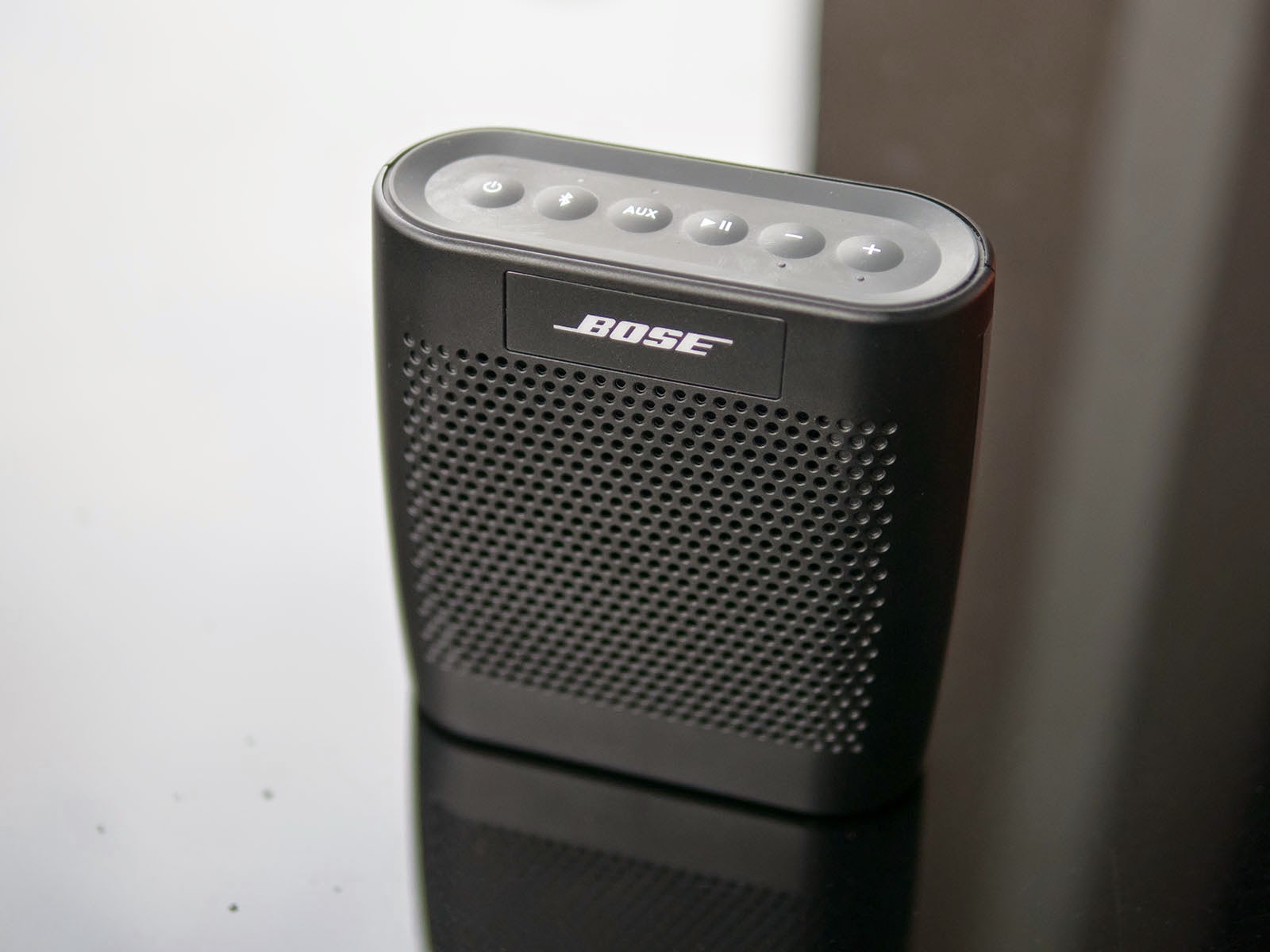
The latest Bluetooth speaker from Bose is also the most affordable one, costing just $129,- or a bit more in Europe with €139,-. The new Soundlink Colour is not just a stripped down version of the bigger Soundlink III or the Soundlink Mini, as it rather seems to introduce an own new category of fashionable and colourful portable speakers for Bose which are more suitable for real outdoor use than the previous Soundlink versions. Let's have a look how much features and sound Bose has managed to squeeze into their cheapest Soundlink.

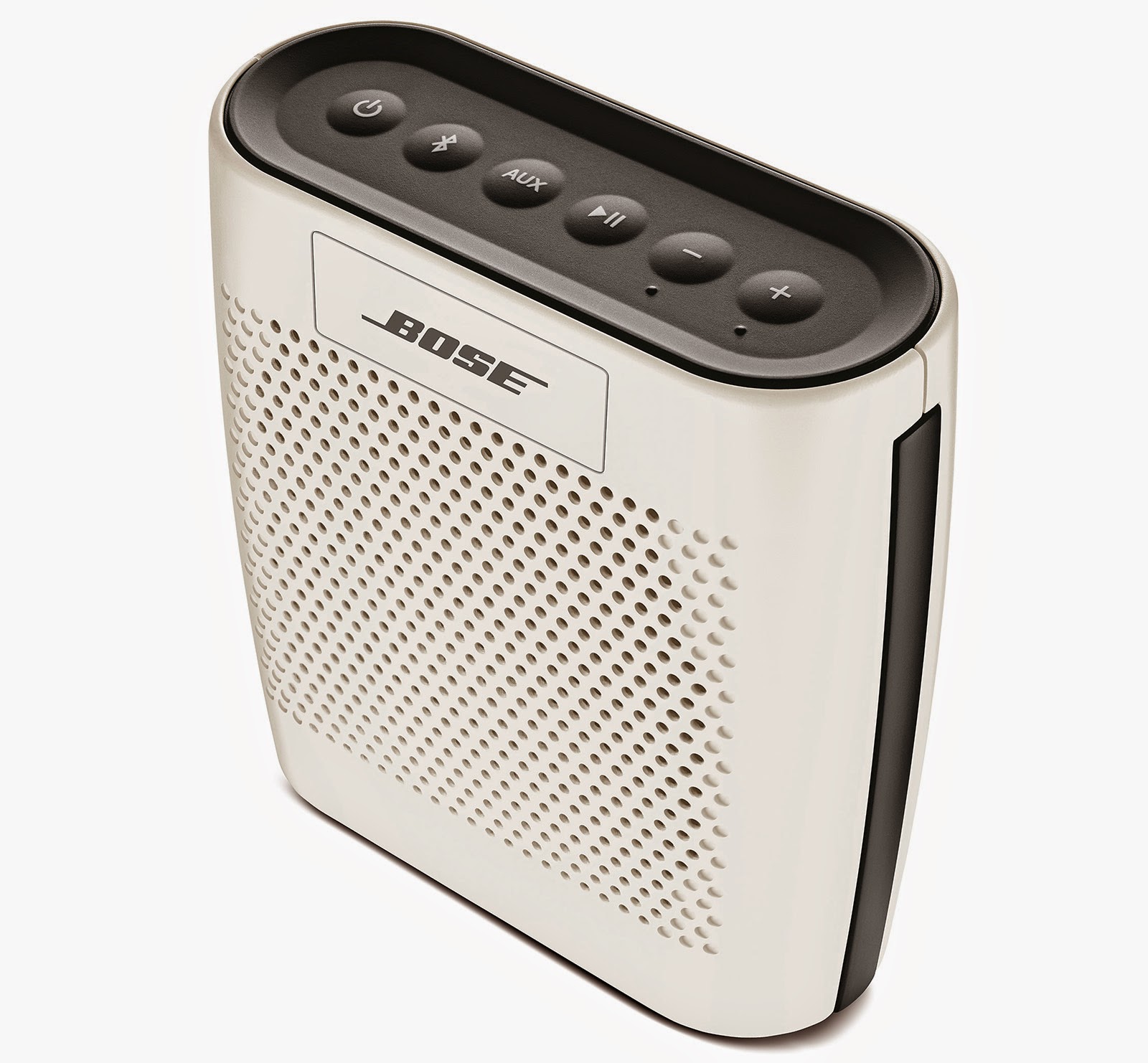
The Soundlink Colour comes in several different colours, my review sample is in black, which looks most understated, but I also like white or mint, not sure about the other colours though.
The speaker has a nice build quality and gives the impression as if it could really be tossed inside a rucksack or a bag without showing any signs of wear. The Soundlink Mini despite having a precious aluminium finish which might give the impression of being really sturdy is in reality quite delicate and prone to scratches, just as the speaker grilles are easily damaged with the finish peeling off pretty quickly, when touched a bit too hard.
My biggest hope was that Bose would announce a Soundlink "Micro", a considerably more compact speaker, something pocketable that is still able to deliver a more serious sound than most current offerings. There are dozens of book sized speakers, hundrets of beer-can sized ones, but all pocketable speakers I have heard so far are hardly usable for listening to music, the best ones being the JBL Clip or TDK Trek Micro, which both are still quite tinny for my taste with no bass at all below 100Hz.


The Soundlink Colour is bigger overall than the Soundlink Mini (I measured about 60% more capacity nearly reaching the size of the JBL Charge 2), but it is also lighter. Still due to the different form factor and its rounded edges it might even be easier to carry around or packed away than a Soundlink Mini, let alone a JBL Charge 2. It feels nice in your hand and although missing this typical "premium"-feel of the Soundlink Mini, the Soundlink Colour doesn't feel cheap at all as you can still discern Bose quality here.


Although the Soundlink Colour isn't reported to be waterproof or specially rugged in any way, I was already told by Bose that some additional neoprene covers will become available in future, which will definitely make the speaker even better suited for outdoor use at a sandy beach etc. I would have definitely hesitated to use the Soundlink Mini in such a setting, but wouldn't be afraid of placing the Soundlink Colour right beside on a wet towel.


There's not much inside the box, the Soundlink Colour comes just with a small 5V 1A charger and a Micro-USB cable, no other accessories are included. The biggest news here is that the Soundlink Colour can indeed be charged through Micro-USB. This was what many complained about with all previous models. Actually Bose seems to have listened to user-complaints and fixed many points of criticism.
Charging shouldn't take longer than 3 hours with the included charger. A flashing orange LED will display the charging procedure to become steady green when charging is done. There's no dedicated indicator showing the actual charge. You have to keep the power button pressed and if it lights up green, there is still "high charge" left, orange means "medium", if "low" the LED will turn red.


You either like or hate the new design. My wife said it's ugly, I think it has something of a classic Braun electric shaver, albeit an oversized one.


The speaker has only 2 ports at the back, namely the USB-port and an auxiliary input. On top of the speaker you will find all control buttons hidden under a rubber coating. This should allow using the speaker with wet or dirty hands as well. Beside the power button, the volume buttons etc, finally also track control is possible directly through the speaker with the new play/pause button, another finally fixed issue that was not available on the other models. You can start or pause music and skip forward or backward by double pressing or tripe pressing it. There is still no speakerphone functionality which might put off many, but I don't miss it at all.


A really useful feature now is the ability of enabling or disabling power saving mode. While so many owners always complained about the Soundlink Mini to turn off on its own after some time, which was no big deal for me, this feature can now be disabled for your liking. If you want to use the speaker stationary with permanent power on, you can do this now, just keep "Aux" and "+" pressed for some seconds to toggle between on or off for the "auto power off" function.
"Aux" and "-" kept pressed for 10 seconds will finally do a factory reset, in case you want the speaker fresh again or to prepare it for resale...


Another big novelty are voice prompts. The Soundlink Colour talks to you now. On the first power on you'll have the choice of selecting many different languages for voice prompts. Beside English, French, German etc, I also recognized Italian, Spanish, Portugese, Dutch, Polish and Russian with some other languages, which are probably Chinese and Japanese. Good news first: the voice prompts can also be disabled, which I welcome very much. The speaker will still play some beeps when paired or when attached to mains, but it won't talk around. Especially the computer voice (a kind of female simulation) is a bit annoying. There seems to be a real speech synthesizer built in unlike some sampled phrases as it is the case with many other talking speakers, but on the Soundlink Colour it just sounds artificial and awkward. Keep both volume buttons pressed for 3 seconds and the voices are gone. Kudos to Bose to give us the option. The voice might be helpful though if you want to know which devices are paired with the speaker. The Soundlink Colour will remember up to 8 devices, but usually will automatically pair with the 2 recent ones as 2 devices can be paired with the speaker simultanously. When the first device stops playback, the other device can start playing, without the need of any new pairing or switching procedure. Bluetooth connection is nearly instant on the Soundlink Colour, unlike many other speakers I have tried, where you sometimes have to wait up to 10 seconds until they finally decide to establish a connection.
If you still want to connect to another already paired device you can simply switch between them by pressing the Bluetooth button. The first press tells you which devices you are currently connected to, this is where the voice prompts can really be helpful. Press the Bluetooth button again within 3 seconds and the speaker will search and try to connect to the next available device in its list. You can scroll like this through all paired devices, which is really a nice thing. If there is no other device available, it will tell you that no other devices were found. The only speaker I know that has a similarly comfortable way of switching between different devices is the Fugoo, but you will never know which device it is going to connect to next, while on the Bose you will indeed hear which device is connected now, in case you have the voice prompts enabled of course.
Many other Bluetoothspeakers are quite a pain to use with different streaming devices. They either search for the latest device only and won't automatically connect to any other already paired devices, so you have to manually dig them up from the menu and force a connection, or they simply refuse any other connection and you have to repeat the whole pairing procedure from scratch to pair the speaker to another device, which was the case on the AudioXperts EVA Blu for example.
I have to applaud Bose for finally making Bluetooth connections that easy and comfortable. Although I always hated any kind of voice prompts, in case of the Soundlink Colour they are really useful as the speaker will always tell you which devices it is connected to. It works much better than on any other Soundlink model I have tried, let alone most other Bluetooth speakers that manage to make Bluetooth pairing or reconnecting a frustrating experience.
By the way, with the Soundlink Colour volume control should now be in sync on the streaming device and speaker. I have tested this with several iOS device, not sure about Andorid or other. But while most other speakers just offer 15 volume steps (some may have 32 or 35), the Soundlink Colour still has all 100 steps, like all other Bose speakers I have tried. 100 steps allow much finer volume control than the rough jumps you get from a JBL Charge 2 for example, which nearly doubles volume with the first steps on each press. A synced volume control should also work better with dynamic sound processing, as you cannot confuse the speaker with a too low input level, while setting the speaker's volume too high.


As on all recent Soundlink models so far, there are 2 opposing passive radiators inside the Soundlink Colour as well. Opposing passive radiators mean less vibration because they cancel out their forces, so you don't have to be afraid of the Soundlink Colour rattling or creeping around at higher volumes. The openings on the upper part of the back indicate where the back passive radiator is located. The one at the front is at the same height, but the main part of the music is still produced by the 2 active drivers, which are located below. The Soundlink Colour is indeed a stereo speaker, but the drivers are so close together, you won't notice any stereo separation. I think that Bose even tried to apply some tricks to enhance the stereo effect, because when peering through the openings, you might notice a kind of bar in the center between both drivers. This bar reminds me of the acoustic barrier that speakers always use which apply "Embracing Sound" for stereo enhancement, they call this "plate", which seems to be necessary for the system to work. Embracing Sound is a kind of inversion of the M/S stereophony, but in case of the Soundlink Colour it doesn't work or it might have another purpose, but regardless what I tried I was not able to get any real stereo width from the speaker. A Soundlink Mini, which is not a very broad sounding speaker either is nevertheless able to produce a broader stereo field than the Soundlink Colour. You just have to accept the fact, that with the Soundlink Colour you are actually listening to a stereo speaker that sounds mono. Nothing wrong with that, as the fewest portable speakers that small really manage any convicing stereo stage either. The Jambox with its "Liveaudio" algorithm or the Geneva XS thanks to Embracing Sound being the rare exceptions.

Let's have a look and listen what kind of sound we can expect from the new Soundlink Colour.
To tell the truth there is not much surprise here. The Soundlink Colour delivers solid sound with the typcial Bose sound signature which is slightly boosted bass with boosted lower treble at the same time. As usual for Bose the sound is already quite full-bodied at lower levels, althouth appears a bit dull and starts to brighten up close to medium levels. You won't get any class-leading high-end sound, which was to be expected, given the Soundlink Colour being a lower-cost model, but to my surprise there are even some slight enhancements in sound over the original Soundlink Mini. The first thing you will notice when putting both side by side and playing the same music is that both still sound pretty similar, but at the same time the bass of the Soundlink Colour is not reaching as deep as that from the Soundlink Mini. Overall bass amount is still comparable, both have a bassboost compared to their mids, but the bass of the Soundlink Mini reaches deeper down to 60Hz, while the Soundlink Colour has already a strong roll-off at 80Hz. This typical bass-thump that many love and others hate from the Soundlink Mini is a bit missing on the Soundlink Colour. Nevertheless it is not a bass-light speaker, there is still plenty of bass compared to most other contenders, which do not manage any real bass at all. The Soundlink Colour plays with a similar bass level to the Soundblaster Roar, which I reviewed here.
Surprisingly the Soundlink Colour manages to sound cleaner with less distortion than the Soundlink Mini. Due to the missing lower bass part of the Soundlink Mini, the Soundlink Colour doesn't struggle that much with bass-heavy recordings or when playing at higher levels. Many tracks start droning quite a bit on the Soundlink Mini already slightly above half volume, this is not a problem for the Soundlink Colour. It will even play slightly louder and with less dynamic compression. There is still some bass reduction at higher levels, but the difference in sound between low volume and high volume is not as severe as on the Soundlink Mini, which at high levels puts out an overly compressed sound with some noticeable intermodulation distortion and booming bass. With both played at their maximum volume the difference in bass amount is not that pronounced anymore as on lower levels, but the Soundlink Colour manages to deliver cleaner sound with less compression and less distortion.
Although the Soundlink Colour is still not a bright sounding speaker, it is an improvement over the rather dull sounding Soundlink Mini, especially when not listened exactly on axis. When both are aimed directly at the listener, the Soundlink Mini might even give a clearer impression, but tilt both away slightly and the treble will even improve on the Soundlink Colour, while it falls off on the Soundlink Mini considerably. Maybe this is the reason for the center bar between both drivers, which might acts as some kind of reflecting surface to add some dispersion to the high frequencies, I am just guessing though. Treble could still get along with a little bit more sparkle, but overall I think it sounds more convincing now. Many tracks sound considerably clearer on the Soundlink Colour, although mids got quite a hollow character now. The Soundlink Mini sounds more refined although duller. I would have preferred the bass tuned a bit lower on the Soundlink Colour but with less boost than it is now as I have the impression as if bass was already bleeding into the mids quite a bit and covering them even more. I think boosting bass less would have helped to make the sound a bit more classy and the speaker might have lost some of its boxiness. The bass of the Soundlink Colour has some resonance peak at around 100Hz which can make many songs sound strange. I noticed it especially with bassdrums which tend to have a longer decay than usual. You can also hear this resonance if putting your ear closer to the back passive radiator, you will probably notice some slight rattling coming from the enclosure. The result is still better than of many other similar sized speakers I have heard, but Bose could have held off slightly by pushing the bass less.

Of course I also did some measurements of the Soundlink Colour to allow for a better visual judgement of my sound descriptions above, which are understandably always quite subjective.
First some close-up measurements at medium volume from 10cm to minimize room influence. Compared to the Soundlink Mini shown in green, you can see that both still have a similar sound signature, but the bass of the Mini reaches lower. At the same time you can see better treble extension on the Soundlink Colour, but it still rolls off too much.

 
In the following graphs you can see the in-room response from 50cm at all 100 volume levels with 7 steps in between each measurement to achieve 15 distinct curves, the blue one being 50%, while the red one being 100% (smoothed with 1/6 octave):


There is a slight bassboost visible from the lower volume curves while stronger bass reduction already starts above 50%. If looking at the maximum volume measurements of both Soundlink Colour and Soundlink Mini (in green again), you will notice that the Soundlink Colour shouldn't sound that different anymore, as the Soundlink Mini managed to reduce most of its bass advantage with only some deeper bass still present in the background:


Here we see the difference in sound on-axis and off-axis (in pink), which was measured from 30cm above, which results in about 37°. Below the same measurement from the Soundlink Mini. Although the Soundlink Colour still has some treble loss when listened off-axis, the Soundlink Mini shows it to a stronger degree with a 10dB loss above 10kHz thus becomes quite dull more quickly than the Soundlink Colour:


I am not sure which speakers might be direct competitors to the Soundlink Colour, as I haven't found any suitable ones, most cheaper or smaller ones just don't sound that full-bodied, while some other similarly priced ones like the TDK A33 or the Soundblaster Roar are mostly bigger and might sound louder overall, but not really better. Therefore I prepared a first comparison video with the Soundlink Mini to show how much compromises in sound must be made compared to its bigger brother. Another video shows the Soundlink Colour compared to the Creative Soundblaster Roar, which currently is a very popular speaker although bigger and heavier costing 20$ more. Although the Roar should play quite a bit louder than the Soundlink Colour, in reality the Roar already struggles at top volume with some severe volume fluctuations which you can also hear in this video resulting in a top volume which is hardly louder than the Soundlink Colour in the end.


Concluding I think Bose managed quite an appealing portable speaker which can convince of most its features. The Soundlink Colour would probably find a place on my wish list, if I didn't already own dozens other portable speakers. All features are implemented really well and I am especially impressed with the Bluetooth connectivity and how well it works. As soon as you turn the speaker on it will automatically connect to the nearest 2 devices. If you want to connect to another one instead, just press the Bluetooth button and scroll through all other already paired ones. I am not sure any other speaker gives you this comfort. Others often won't even connect to the last device for unknown reasons (the Soundlink Mini being no excpetion). Bose also managed to improve on most critical user comments and offers not only MicroUSB charging now, but also the ability to disable the "auto power off" feature that many complained about constantly.
It is just when looking solely at the sound, that the Soundlink Colour doesn't impress me that much. It isn't a bad speaker by any means, it is just that meanwhile you can get better sound for a similar price. If it was offered below the magic 100$ or € mark, it would certainly manage to stir up the market quite a bit, but for 20$ or 10€ more you can already get a JBL Charge 2 or a Soundblaster Roar, which manage either a more balanced sound with more punch or can play louder.
When the Soundlink Mini was announced more than a year ago it was pretty unique and without any real competition, a similar sized Jambox costing the same at that time was a bad joke soundwise, not to mention the Beats Pill which still costs 199 today! But other companies have finally managed to catch up or even improve on the sound of the Soundlink Mini, the best example being the new JBL Charge 2. The Soundlink Colour on the other hand doesn't offer any big advances in sound, but it doesn't sound bad either. Bose knows how to make speakers sound appealing, but for my personal taste, I would have preferred a slightly more balanced approach with better treble extension and deeper but less boomy bass.
The Soundlink Colour reminds me a bit of a vintage portable transistor radio, albeit without a radio but Bluetooth instead. It sounds better than any portable radio I have heard, like the larger and more expensive Tivoli PAL that also I own, but just don't expect any hi-end listening experience. The sound is a bit restrained and sounds as if it was trapped inside the speaker. In the meantime I know how "open" a small portable speaker can sound after I have experienced the Fugoo. It is definitely not as bass heavy as the Soundlink Colour, but it is still more enjoying to listen to, due to the depth of the sound it is able to produce, while the Soundlink Colour gives rather a one-dimensional impression.

Last but not least I would like to thank the Bose Experience Center Wien for providing me the review sample.

+ affordable 
+ colorful sturdy design
+ solid and full bodied sound
+ high possible volume without distortion (slightly louder than Soundlink Mini)
+ less forced sound than the Soundlink Mini with less compression
+ clearer and less directional treble than Soundlink Mini
+ great Bluetooth implementation
+ automatic multipoint pairing with 2 devices simultanously
+ easy switching between different devices
+ voice prompts helpful to indentify paired devices
+ track controls on the speaker
+ synced volume with streaming device
+ 100 dedicated volume steps
+ charging through MicroUSB 
+ auto power off can be turned on or off

- bass not very deep with cut-off at 80hz
- boomy and hollow sounding due to boosted upper bass
- still stronger treble roll-off
- sound a bit restrained with no stereo separation
- could be more compact

Senin, 22 September 2014

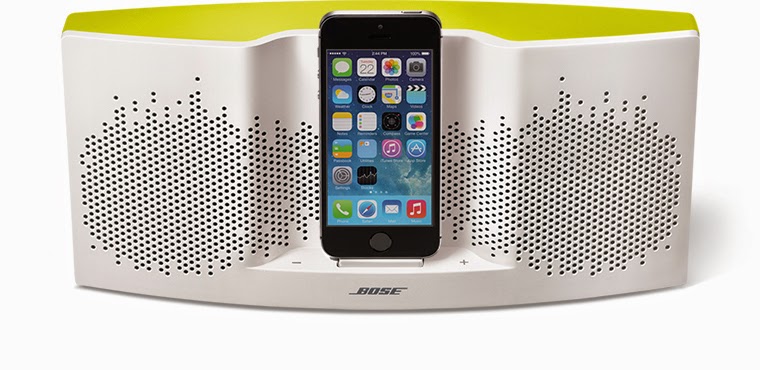
News: Bose Sounddock XT - the dock is dead, long live the dock!


So far I haven't even noticed any announcements about the new Sounddock XT, but today during my visit at the Bose store they already had one on display and I could have a look at it.

The design is pretty funky, not that old school as the previous models. I couldn't have a listen unfortunately as I still have my old trusty Iphone 4, while my wife got her Iphone 5 with lightning-connector only. The Sounddock is not equipped with Bluetooth, with so many speakers currently supporting multiple connections through Bluetooth, Airplay and even dock or Micro-USB simultanously, I am pretty surprised to see the Sounddock XT being just equipped with a lightning connector. This limits the usage to Apple-devices only, which is a pity.
Overall I really like the looks of the Sounddock XT, at the same time it got pretty cheap compared to the old Sounddock models.

According to the Bose salesman the new one is not as powerful in base, but to tell the truth, the old one was already a bit owerpowering, maybe the new one sounds more balanced now. I will have a listen next Thursday when I will be returning my review sample of the Soundlink Colour.


Rabu, 17 September 2014

News: The new Bose Soundlink Colour - because paint is beautiful!


Bose announced the new Soundlink Colour, a completely new speaker with quite a different design than the Soundlink Mini but also cheaper and more colorful. It should become available worldwide during the next week(s). Biggest improvement seems to be charging through USB, it also seems to have track controls, at least it looks as if you could play/pause music, not sure how to skip tracks though. The Soundlink Colour supports multipoint pairing with 2 devices to quickly switch from one to the other. A pity it doesn't seem to support pairing with another speaker for wireless stereo as so many recent speakers already have this great feature included.

I have no clue how the new one might sound, but it looks quite a bit more rugged and portable than the Soundlink Mini which rather looks good on the shelf at home, than on a sandy beach. The new one seems to be better suitable for transport due to its flat form factor it is also slightly lighter, but I have yet to see it in person to be able to judge the difference in size between both.


Despite all the beautiful colors, I think I like the white one most. As soon as I can get my hands on one, I will of course compare it to the Soundlink Mini. Let's hope the new one is not just a cheaper trimmed down version, but will also have some ace up its sleeve especially regarding sound, maybe loudness, clarity etc...

I prepared a simple and rough 3d-sketch according to the specs the Soundlink Colour is not that small. It is about 60% larger in overall capacity than the Soundlink Mini and already reaches more or less the size of the JBL Charge 2:

Selasa, 16 September 2014

Review: JBL Charge 2 - the failed new benchmark!


I am actually quite surprised about the lack of rumors or reviews regarding the new JBL Charge 2.
The old JBL Charge was one of the most popular speakers with thousands of reviews on Amazon.com from many enthusiastic owners claiming it to be the best portable speaker around. I personally found it pretty mediocre, sounding like a typical canny small speaker, with a strange boomy upper bass. Even the much smaller FoxL sounded more mature overall, although it was not able to reach the high volume of the JBL.
Instead of the JBL Charge, I would have probably even chosen the UE Boom, despite finding that one pretty average too.
But meanwhile the new JBL Charge 2 was announced or not really announced, as any "official" announcement is still missing, maybe they wanted to wait for the IFA. But the first units are already available on Amazon.com and Amazon.de, and I managed to grab one because I was really curious to see and hear if there are any improvements over the old model.


Designwise the new one is a big improvement. The Charge 2 looks pretty slick now, while the old one looked a bit toyish to me due to all the overdone roundings. Also proportions are much better on the new one, the speaker grille is larger now and better fills the space, especially the ports at the sides were looking a bit out of scale on the old Charge, while the Charge 2 has nice big openings to the sides now. Maybe others will see that differently, but put side by side, I prefer the Charge 2 much more now.


The Charge 2 is not a small speaker, the old Charge was not small either, but the Charge 2 even increased in size slightly, both in length and diameter. It is still pretty compact, but nevertheless quite a bit larger than a Soundlink Mini for example, or a UE Boom, which is both slimmer and shorter thus better to be packed away.


The Charge 2 has nearly 3/4 liters of capacity and would soon reach sizes of larger speakers like the Soundblaster Roar etc. The Sony SRS-X3 is nearly equal in overall capacity, but it is slightly heavier. The Bose Soundlink Mini is the smallest of the bunch, although still heavier than the Charge 2, probably because of the massive aluminium body which unfortunately just pretends any ruggedness as you can clearly see from the dent in the speaker grille of my unit, which I still don't have the finest idea where and how this happened.


In contrast to the old Charge the new Charge gained speakerphone and an own "social mode" which opens Bluetooth for up to 3 devices to be connected simultanously. Not sure why so much fuss is made about this. The Mini Jambox does the same automatically without any additional mode needed, although the Mini Jambox can only connect to 2 devices. All 3 connected devices can playback music through the speaker, but any new playback will take over the speaker and stop all previous streaming. This is not a bad feature if you want to listen to music with some friends so everyone can contribute its own part, well not everyone, but up to 3 maximum, a kind of poor man's Airplay. But usually the Charge 2 starts in normal Bluetooth mode after power on, so you will still have to activate the social mode every time you want to use it. I also noticed that not all previously paired devices will automatically connect to the speaker. You have to force the connection from the other devices every time again.
It is the same in normal Bluetooth mode: other than the last paired device won't automatically connect to the speaker. The Charge 2 would always wait for the latest one and won't connect to any other devices that were previously paired. You also have to foce a connection directly from the streaming devices in order to establish a connection. Stupidly there are many speakers which typically behave like this. The Sony SRS-X3 is no exception, unlike the Fugoo which has no problems with finding all other already known devices, if any of the recent ones is missing. The Soundlink Mini usually also connects to any found device, although sometimes with a longer delay, until it finally realizes that the latest device cannot be found so it has to search for another one.
There are no additional track control buttons on the JBL Charge 2. But some owner pointed me to try the "call-button", and indeed you can start/stop music with a short press, double press will skip to the next track, but it seems as if skipping back was not possible.
In the past I didn't care much, but meanwhile I really find the ability to control playback directly from the speaker quite useful, so great to have the option on the JBL Charge 2 too. I sometimes have my iPhone deep inside the pocket, but the speaker right beside me. With the Fugoo I simply turn it on, wait until the pairing confirmation tone is played (which isn't that obtrusive) and I can immediately start playback with the multifunction button or jump to the next track etc. everything without even having touched my iPhone. With the JBL Charge 2 it might still happen that it won't even automatically connect, because it is still expecting another device. This should be fixed for a more intelligent pairing algorithm, similar to the one on the Fugoo for example.


While the old JBL Charge had only 3 status-lights indicating the battery charge, the new one has 5 which makes it easier to really judge how much battery is still left. They usually stay off until you touch any button, then they will light up for several seconds. Many other speakers even manage to add an own battery symbol to your mobile phone, the JBL Charge 2 doesn't unfortunately. I am not sure how exact the displayed charging-level is in reality. It happened to me repeatedly that the speaker showed only 3 lights, but the next day after power on it showed all 5 again, to finally drop to 3 after half an hour. So for a quick check how much energy might be still left, these status lights are probably not really helpful but more a rough indication only.
I cannot say much about the battery life yet, but as the battery has a 2.5 times stronger charge than that of the Soundlink Mini, it should get you through the whole day of listening even at higher levels. I have had the JBL Charge 2 playing at maximum volume for more than 4 hours and there are still 3 lights left. The Soundlink Mini would already blink red or turn off on its own.

The Charge 2 will also charge any external device through its rear USB-port after it is powered on delivering 5V at 1A. It will even continue to charge a device when the speaker is turned off again and will finally stop when the USB-wire is deattached.


Due to the large battery (6000mAh) charging takes about 4 hours with the supplied charger. Although the JBL Charge 2 can be charged with a standard Micro-USB wire, it might take up to 12 hours, if you want to charge it through a less powerful but common USB-port with 0.5A output only.

The new JBL Charge 2 also gained speakerphone ability compared to the old model, but I won't cover that in detail as I hardly ever use this feature on any of my portable speakers. It works as any speakerphone I had tried, but I still always prefer talking directly through the phone, as the respondent usually hears me better like this.

I never liked the old Charge much, the sound was quite a mixed bag with some strange mid-bass hump but without any lower bass making the speaker sound quite boxy and hollow. Listening close to the port on the right side, you could clearly hear that the port was tuned pretty high at maybe above 100Hz making the bass drone quite a bit. At the same time treble was emphasized similar to the JBL Flip, although not quite as strong, but it still resulted in an overall imbalanced sound.
With the new Charge 2 JBL went for passive radiators instead of a bassreflex port. And I think they really did well to switch, as the new one has a much more serious sound now. But before giving any further details on sound I would like dicuss the strange decision about letting the passive radiators totally exposed. For a portable speaker that you usually toss inside some bag, ruckack or whatever together with many other objects, the passive radiators will probably be the first to show scratches and other signs of wear. They are nice and shiny with their metal surface, but don't expect them to remain like that for long. Some longer sharp objects could even damage the rubber part of the passive radiator making the speaker useless, as it would lose air tightness and start farting or whatever.


I really have no explanation why JBL didn't just add a simple grille at both ends to cover the radiators, you wouldn't see them that well anymore, but I prefer a more rugged design over a useless one. JBL even cut down on providing the carrying bag from the old model. There is none included with the JBL Charge 2.
I could even imagine some additional protecting caps, that you could just put on for transport, maybe even with a built in grille, so that you could use the speaker without taking the protective caps off. If JBL was clever they could offer them in future as an expensive accessory, or they simply offer another carrying bag to be bought separately. The nicest touch would be, if the speaker could be left inside the bag for listening, with some acoustically transparent materials where the drivers are located. At least there are some third-party options available to protect the speaker for transport:
Duragadget offers a padded bag for the JBL Pulse, which should also fit the JBL Charge 2 easily and it is not too expensive with 10$.
In my opinion the JBL Charge 2 is not the best speaker for real outdoor or portable use, also the fact that it will only stand stable on a flat even surface makes it rather awkward to use. I didn't manage to place it on my couch or outside on a lawn as it always tended to roll away. While the whole speaker is rounded, there is only quite a narrow base at the bottom of the JBL Charge 2 thus making the whole speaker feel a bit shaky.


Maybe because of this JBL added another interesting detail as the right speaker side has some additional little feet to allow upright placing. Not sure when I would like to do this, it would definitely make sense if you could pair 2 JBL Charge 2 for wireless stereo, like you can do with so many recent Bluetoothspeakers now, but maybe this is the only way to place the speaker on a bumpy base. These little feet allow enough clearance to not cover the passive radiator entirely, so that it can still contribute to the sound. Although you will notice slight vibrations from the passive radiators at higher volumes, there is no imbalance, because both cancel their forces due to firing in opposing directions. The speaker won't crawl or dance around with heavy HipHop beats, like many other speakers with passive radiators do.
While I could easily place the Fugoo on the car dashboard, the only way to use the JBL Charge 2 in a car would be to place it inside a cup-holder, otherwise just put on the passenger seat it would be rolling around. Placed like this it works quite well despite one passive radiator being covered. 


After power-on you will hear the typcial "bubble"-sound that is used on nearly all recend JBL speakers so far. When Bluetooth pairing is active you will hear some sonar-like tone and finally when a successful connection is established you will hear another blip. Fortunately the speaker does not talk, but all those tones are still much too loud for my taste. The JBL Charge 2 plays them with a fixed volume, which could have been set much lower, but fortunately it doesn't blast them with full loudness like it was the case with the JBL Flip and the old JBL Charge if you left the speakers on maximum volume before power-off. Next time you turned them on, all these tones were played at maximum volume! Now this has at least been fixed, but they are still much too loud.


When I saw the first images of the upcoming Infinity One and later the JBL Charge 2, I thought the JBL Charge would be some kind of smaller version of the Infinity. According to the exploded-view the Infinity One has 4 drivers which aim to both the front and backside of the speaker. Together with the passive radiators to the sides, you should get a pretty convincing 360° sound which should be perfect for portable use, as you could just put the speaker somewhere somehow and it should still sound good regardless from where you listen. I really love the 360°  feature on the Fugoo, which makes positioning of the speaker much less critical. But although the JBL Charge 2 has speaker grilles at the front and back, in reality it has only 2 active drivers at the front. The back grille is probably only there for esthetic reasons. I also found the published images on the JBL-site quite a bit missleading, which rather suggested the speaker to emit sound to both sides, which in reality it doesn't. But fortunately the Charge 2 drivers are still pretty decent and nearly non directional unlike those from Bose, which suffers quite a lot, if you don't listen exactly on-axis. The JBL Charge 2 is much better in this regard. It can be heard from upwards or from the sides and will still sound very convincing with hardly any treble loss, it is just from behind, that it won't sound good. If you want this, you'll need a real 360° speaker like the Fugoo!

Now let's cover the most important aspect, namely the sound!
I must confess that the JBL Charge 2 sounds pretty darn good and balanced for a compact speaker. While meanwhile there might be several similar speakers which do manage to sound impressive for this or that aspect, the JBL Charge 2 just sounds right. You won't have the impression as if something didn't fit in, it just sounds! The Bose Soundlink Mini managed to impress because of its powerful bass that was unheard of any speaker this size when it was announced, but the overall sound was not really convincing, with pretty muffled and directional treble. Although the Sony SRS-X3 also has its strengths with a more pleasant general tuning than the Bose, the Sony suffers from distortion issues at levels already starting at medium volume, and sometimes it just doesn't sound true. The JBL Charge 2 on the other hand has a very smooth and even response, starting with a deep and powerful bass up to the pretty nice sparkling treble, without neglecting the whole mid-section in between.
I think this is indeed the best sounding portable speaker I have ever heard so far within its class of course. There are definitely larger speakers or stationary ones which will sound considerably better, but I have yet to hear a better sounding one with a similar size and form factor of the JBL Charge 2!
Compared to the old JBL Charge it is just no contest. These are two completely different speakers. The Charge 2 sounds like a big speaker, while the old one sounded like a beer can. Compared to the Soundlink Mini, you will get a similarly powerful bass, but the bass from the JBL sounds much more realistic, not that boomy. The bass on the Bose might even reach slightly deeper, but it is boosted too much as a whole already covering the mids and tending to drone with particular recordings. I am not even mentioning the treble, but the JBL has real treble that will still sound clear when listened from less optimum positions.

What surprised me a bit was the maximum volume, or more the lack of it. While the old JBL Charge was very loud for such a compact speaker, although harsh and unpleasant sounding, the new one pretty much lost in this regard. It can play maybe at 3/4 volume of the old JBL Charge but it does so by already compressing dynamics quite a lot. There is of course also a bass-loss at higher volumes but interestingly it is not that obvious as with the Soundlink Mini or even more with the Sony SRS-X3, which both start to sound quite a bit tinny at higher volumes. The JBL Charge manages to keep its frequency balance and it also retains some more punch than the others despite the added dynamics processing. When listening to the same songs through the Charge 2 and the Soundlink Mini side by side, you will still hear the attacks of a kick-drum or snare on the JBL well, while on the Bose it will be compressed away resulting in a constant mush. JBL seems to apply different compression algorithms which sound and act in a more musical way than those from Bose, I won't even mention those from Sony, as these tend to flatten all peaks away similar to a sledgehammer.
I only observed some problems with dynamic and heavy mastered jazz recordings like those from Gregory Porter. You could easily hear how the whole loudness suddenly decreased during some really busy parts including lots of horns and bass at the same time. The dynamics processing is less obtrusive on more constant and smooth recordings.

Interestingly all 3 speakers reach more or less a comparable maximum volume. The Sony SRS-X3 might have a slight edge in overall loudness, but it has considerably less bass at top volume than the others and much more distortion at the same time. Speaking of distortion, the JBL Charge 2 usually doesn't distort much, even at its top volume. It is missing the typical intermodulation distortion that plagues the Sony SRS-X3 that much and also the Soundlink Mini to some degree. Especially the Sony has some obvious treble distortion which sounds like "ringing artefacts" and already starts from medium volume upwards, mostly heard when some heavy bassnotes are played together with cymbals or hi-hats. The Soundlink Mini has the same problem, but it is not that obvious and rather noticeable at higher levels only. The JBL Charge 2 seems to have the drivers better under control, maybe they don't even move that much as on the others, otherwise I cannot explain why the JBL sounds that clean, without any obvious treble distortion. But I noticed other forms of distortion which I am not sure if they were already present at the very beginning. Higher volumes started to cause the drivers chirp quite a bit. At the beginning I wasn't even sure if this was some kind of "effect" present in the original recording, but then I noticed that mainly the right driver seems to produce this chirping. It might have indeed crept in later during my tests as the driver got maybe loose. It sounds a bit as if a wire or other object has contact with the transducer and resonates at particular frequencies. If really just high volume playback managed to cause this problem, I would even assume that any protecting circuits to prevent driver overload are missing inside the JBL Charge 2. When I did my measurements with higher amplitutes, I could repeatedly hear some worrying crackling and audio pops especially at really low frequencies. The JBL Charge 2 is probably even missing a high-pass filter, thus might be prone to driver damage with continuous high volume playback. I never experienced such problems with the Soundlink Mini for example. Although I had playing it for hours at maximum levels, it still sounds the same as it did 1 year ago when I bought it.
An interesting side effect of the soundprocessor's dynamic nature can be heard, when the speaker is quickly cranked from quiet to loud. The first beats played at maximum volume will sound pretty distorted, until the soundprocessor finally adjusts to the overall sound and reduces bass accordingly. So far I only heard a similar effect from the Denon Envaya, but the Denon was much quicker in adjustment, while the JBL Charge 2 will mostly take several beats when a housetrack is heard.

I prepared some videos where I compared the JBL Charge 2 to its biggest competitors. Of course for best results please use headphones or really good speakers, but the relative differences should also be easily heard with any speaker which can play down to 60Hz.
First let's listen to the old JBL Charge. Unfortunately the old JBL Charge sample I got for my test seems to have a driver spoilt, as there is some slight farting noticeable, but you should hopefully still get an idea about the sound difference between both and about the difference in loudness, which can be heard at the end of the video.


The direct comparison with the Bose Soundlink Mini reveals some interesting details. I think especially the recording from above shows why the JBL Charge 2 has such a big advantage over the Bose in this regard. Directly on-axis the Soundlink Mini is not bad, but compared to the JBL it sounds artificial and overall too colored in both bass and treble with subdued mids.


When listening to the JBL side by side with the Sony SRS-X3, you will probably notice the slightly deeper bass of the Sony, but at the same time there is already obvious intermodulation distortion noticable even during the first part of the video which was taken at about half volume for both speakers. On the Sony the vocal part sounds as if she had swallowed her electric tooth brush. Apart from that the Sony just doesn't sound right, despite all my raving about it some months ago, although not really bad, when put against the JBL Charge 2 it is just no match.


I also wanted to show how the JBL Charge 2 compares to other even larger quite popular speakers like the TDK A33 for example. Although the A33 is a pretty nice sounding speaker with a relatively flat response, the JBL just sounds more serious with both better definition in bass and treble and a less honky sound. The TDK A33 can play quite a bit louder, which you should hear at the end of the video.


The Creative Soundblaster Roar costs exactly the same as the JBL Charge 2. The Roar is about twice as large and heavier and it packs quite a bit more features like playback from MicroSD, NFC, AptX etc. The Roar is definitely not a bad sounding speaker but directly compared to the JBL Charge 2 it suddenly gets a bit of a kitchen-radio character to it. Especially listen to both at maximum volume at the end of the video and you should hear the Roar struggle with severe volume pumping-effects:


I am not sure if you really want to hear the direct comparison of the JBL Charge 2 against the more expensive UE Boom, but as many seem to like the UE Boom that much and always defend it with all their energy every time I poke fun at it, here you are:


Of course the UE Boom will play louder, but the overall sound quality it puts out is not even worth losing any further words. It is just if you really need this loudness, that it might have its purpose, but then I might also take a cheaper Pasce Minirig which plays equally loud, but with a better and more punchy sound than the UE Boom!

Now let's have a look at some frequency response measurements. First an in-room response at medium volume and 50cm distance compared to the old JBL Charge in green with 1/6th octave smoothing (to read more on my measuring setup, have a look here):


That's quite impressive for the JBL Charge 2 and pretty smooth overall with only some stronger hump at 14kHz which usually shouldn't be heard that much or might even be responsible for the sparkle in the treble. The old Charge has some overly bloated upper bass, with hardly any bass below 100Hz and an equally bloated treble as it was the case with the JBL Flip, although not as extreme (you can see a measurement of the JBL Flip together with the Mini Jambox here for reference).

Here in pink you can see the measurement from 30cm above, which is more or less 37° off axis. Although there is some treble loss when listened off-axis, treble is still present and makes the response even slightly flatter without that obvious hump at 14kHz.


To minimize as much room influence as possible I also tried a nearfield measurement from 10cm close to one of the drivers. As I can only estimate where the drivers are located, because you cannot see them through the grille, the measurement might not be 100% correct, but we should nevertheless get a first idea. For comparison I also did the same with the Soundlink Mini, which you can see in blue (no smoothing):


Now this is what I would call an examplary frequency response. The JBL Charge 2 is nearly completely flat within +/- 3dB from 75Hz to 9kHz (interestingly JBL even provides 75Hz as the low frequency limit in their specs which would be pretty much spot on unlike many others who claim their speakers to play down to 20Hz while in reality they won't even play 100Hz well). Although the Bose Soundlink Mini might have a deeper reaching bass at the same time it has a very uneven response with both stronger dips and humps within the whole spectrum.
I think the JBL Charge 2 is the proof that the best sounding speakers are still those with the most natural response in contrast to all the speakers with an excessively sculpted sound...

Where the JBL Charge 2 fails completely though is at lower volumes. If you like to listen to music at lower levels, you will probably notice the higher than average noise-floor of the JBL Charge. It is pretty obvious when compared to most other speakers I have tried, the only one being the Soundblaster Roar with an even stronger noise, especially with both "Roar" mode and "Terabass" enabled.
The JBL Charge 2 has only 16 dedicated volume steps and the change in loudness during the first 5 steps is set much too high. The volume control is in sync on both the speaker and the iPhone, so there is no way to get any further steps in between, at least not on an iOS device, I am not sure if all android devices act in the same way. The Mini Jambox for example also has 16 steps only, but the volume curve starts with a much flatter slope, to finally rise at higher levels. On the JBL Charge 2 it is exactly the other way round. Each step up to 5 nearly doubles the loudness, while from the 5th step upwards the change in loudness decreases more and more. Pretty stupid approach if you ask me, and I would definitely prefer it the other way round with more and finer subdivisions at lower levels. As bad as the UE Boom sounds, at least the guys at Logitech manage to bring out some improvements with every new firmware they issue. The latest firmware for the UE Boom added 32 volume steps instead of the initial 16 which allows for a much finer volume control than before, although it was already better before than it is now on the JBL Charge 2. I also doubt that there will be ever any firmware update available for the JBL Charge 2. I have not seen any portable speaker from Harman yet which would allow for updates.

Let's have a look at the measurements of all the possible volume levels available from the JBL Charge 2:


The problems at low volumes are not only related to the strong jumps in loudness, but also seem to base on the sound processing problems I already mentioned before.
Update: All issues were finally fixed with the latest Firmware, please check out my posting here.
It is pretty obvious from the measurement, that the first curves are missing bass compared to the louder settings. The 3rd curve finally starts to gain a boost in bass, although I rather think this to be the measuring of some processing artefact, as I in reality I have not heard any bass increase until the 4th or 5th level which finally seem to sound correct. It is just from the 7th level upwards, that the speaker starts to dial back bass slightly, with even stronger bass reduction at further levels. But thankfully the JBL Charge 2 manages to retain more bass at maximum volume than all the other speakers. It will still sound quite full-bodied and punchy, although the stronger compression will be noticeable as well.
Low volumes are quite strange though, while most other speakers tend to boost bass at lower volumes, the JBL Charge even takes away bass at its lowest volume settings. I wouldn't complain if bass amount remained the same, but they really dial bass back at the first and second step, WTF?

I am not sure what went wrong, if the DSP programmer was drunk or smoked too much pot when he did the tuning. Because together with all the artefacts and additional distortion the speaker is producing now, I cannot really take it serious. A speaker that cannot play at low levels, or cannot play particular tracks because they cause distortion, and it shouldn't play loud for longer periods either, because the drivers might start to chirp...

The JBL Charge 2 could easily be the absolute top model in the whole range of portable Bluetooth speakers. In my opinion it easily bests the Bose Soundlink Mini in overall sound quality with a much smoother and more natural sound, but still enough punch to the bass to really make music satisfying. It sounds better than most bigger models, although it won't play as loud. JBL could have tried to tease out a bit more power of the speaker to really stand out from the crowd of competing speakers, but a Soundlink Mini can play just as loud, similarly priced but slightly bigger models like the Soundblaster Roar will play louder with a more punchy sound at the same time.
It is the sound processing issues that really put me off. I tried 2 different units with different colors from different suppliers and both behaved exactly the same. Many might even not notice that as they will be happy about the JBL Charge to produce that much punch, but anyone serious about music will hear that something is not alright with the speaker. Every second track I played through the Charge 2 distorted, when listening to acoustic Jazz at lower volumes I could hear side noises and growling sounds simply not present in the original recording. I am yet to hear from JBL about these issues, as I have sent an inquiry to their support, but so far no reaction at all. Meanwhile I was in contact with Harman support, which was not very informative though. They indirectly confirmed the issues and suggested to return the speaker but didn't offer any prospect of a fix. When I asked if there will be any updates, they just answered that if there were updates they would be available directly from their site.

As it is now I cannot recommend the JBL Charge 2 without restrictions. It is definitely a great sounding speaker, one of the best if not even the best I have tried so far, but it has sound issues which cannot be denied. Apart from that I would have preferred it a tad louder. The JBL Charge 2 is about comparable in loudness to other speakers like the Bose Soundlink Mini, Sony SRS-X3, Klipsch GiG etc. while speakers like the old JBL Charge or the UE Boom manage to play considerably louder albeit with a much more clunky sound. I also see the exposed passive radiators very critical. This is the worst you can do for a portable device and I wonder how Harman is going to deal with this in the upcoming and twice as expensive Infinity One, which has the passive radiators also completely free. They could have added a protective cover as it was the case with the old JBL Charge, but currently you can only try stuffing it inside a sock in order to not getting it damaged during transport.
The JBL Charge 2 could even substitute a small home stereo system, if 2 speakers were able to pair for wireless stereo. When I directly compared the JBL Charge 2 with a Sonos Play:1, I preferred the JBL to tell the truth, but one single speaker will never give you any stereo separation although the sound is serious enough to satisfy even more demanding needs.
If JBL address most of the issues, like the rough volume control and the processing artefacts and if they also mange to improve Bluetooth connectivity, so that the speaker will always automatically reconnect to any known device, I could definitely live with a speaker inside a sock!


+ more elegant design than the old model
+ same price as before but with a much more serious sound
+ impressive overall tuning with a very smooth frequency response
+ sparkling treble with wide dispersion
+ great punchy bass without any artificial boost 
+ manages to keep more bass at top volume than the competition
+ synced volume control with the streaming device
+ far Bluetooth reach
+ long battery life
+ track control possible through the "call-button"
+ charging of external devices

- severe processing artefacts at low levels
- bass disappears at low levels
- very strong volume jumps at low levels, only 16 volume steps overall
- noticeable distortion on particular recordings regardless of volume or input
- not very loud but in line with most competing models
- noticeable dynamics compression at higher levels 
- doesn't automatically reconnect to previously paired devices other than the last paired device
- social mode has to be activated every time after power-on
- status tones too loud
- passive radiators prone to damage
- doesn't stand very stable
- no protecting cover or bag included anymore
- no advanced features like NFC, AptX, wireless stereo pairing etc...

Selasa, 09 September 2014

First impressions: JBL Charge 2 - the new king? of distortion!


After the announcement of the JBL Charge 2 and the Infinity One I asked Harman if they would send me review samples. They didn't but instead responded about the Infinity One to be not released in Europe at all, but rather be a U.S. only model. Strange decision, but as meanwhile at least the Charge 2 became available here, I simply ordered a white one to try it out and satisfy my curiosity.

All I can say: JBL should have sent it to more beta testers than they obviously did, because as it is now the Charge 2 seems unusable, at least for anyone who wants to listen to music, not noise!
Maybe my unit is defective, therefore I already ordered a replacement and will hopefully get this soon to have a direct comparison and be sure if not all of them are like that.

But judging the unit I currently own, which I assume to be alright, there seem to be considerable problems with either sound-processing, the amplifier or whatever. Apart from that, the sound is indeed great if not even best in class and a huge improvement over the old Charge, although not in all aspects. I will cover that more in detail with my final review. As for now I only want to demonstrate the problems my JBL Charge 2 unit suffers from.

As I sometimes like to listen to music at low levels depending on the situation and mood, I wanted to try out if the JBL Charge could deliver enough sound for my needs. The first thing I noticed was, that it didn't sound that overwhelming at low levels. The Charge has only 15 dedicated volume-steps, exactly like the Fugoo, volume control is synced on both the speaker and streaming device, at least with an iOS device. When controlling volume through the speaker, it seems as if there were 30 steps, but you can only hear a jump of volume every second step. Unforunately the speaker becomes too loud too quickly. Step 5 is already as loud as 50% on the Soundlink Mini. Nevertheless within the very first volume steps the sound remained a bit flat only to become more punchy at higher levels. Compared to a Sony SRS-X3 that I reviewed here, the Sony managed a much more profound sound down to lowest levels while the Charge 2 sounded more canny at comparable loud(soft)ness settings. But the more worrying fact was, that the sound became really strange at low levels. The bass sounded as if it couldn't come through and aside there was some distinct noise and interference artifacts, that I first thought to be the influcence of a mobile phone network, Wifi, or even Bluetooth. Later when I could narrow down the problem and try different solutions to solve it, I realized that it was not solvable. The artifacts which I thought to be interference were even present with the iPhone set to flightmode and with music playing through line-in.

The other problem I heard was some severe distortion on particular tracks that are mastered with a very high gain close to 0dB. Strong peaks like that from a bassdrum start to get a scratching sound. First I thought it to be a problem with the drivers, the passive radiators etc. But this distortion was noticeable at lower levels as well. I thought that because of the synced volume, the input gain through Bluetooth was maybe set too high causing this distortion. But when trying to listen through line-in while lowering volume on both speaker and player to prevent any clipping, funnily the distortion remained exaclty the same as if it was "baked" into the track directly, which of course is not the case, because any other speaker plays these tracks perfectly. To further test this issue I played some sine-sweeps and heard that particular frequencies or frequency changes seem to cause these artifacts. I guess the sound processor is responsible for that, as it maybe tries to process bass adequately, but fails, who knows!

You can hear or download quite an extreme example here. This is an MP3-file of a close mic recording from about 15cm with the JBL Charge playing at volume step 4/15. I switch over to the Fugoo 2 times in this file, and you can hear that beside all the grumbling background noise the JBL has also a much higher overall noise floor compared to the Fugoo. Both speakers were recorded in exactly the same way with the volume more or less matched, which was about half way on the Fugoo thus not that low anymore.

I also prepared a video which demonstrates the problems of the JBL Charge 2 with some selected tracks. To show how the music should sound in reality I also recorded the same with the Bose Soundlink Mini and the Fugoo using equivalent loudness settings and switching between the speakers.
My only hope is that my unit is indeed defective, otherwise the JBL Charge 2 would be a complete fail!


UPDATE: Meanwhile I was able to test another brand new unit, but also on YouTube several other owners confirmed the same issues with their JBL Charge 2. This would lead to the conclusion that indeed all units seem affected. I already contacted Harman on this problem and am curious to hear what they will answer and what kind of fix they might offer!

UPDATE2: All issues were finally fixed with the final Firmware, please have a look here.

Minggu, 07 September 2014

Test: Fugoo Bluetooth speaker - der aktive Lautsprecher für Aktive!


Ich habe nach einigem "Betteln" nun endlich direkt von Fugoo ein Testgerät zur Verfügung gestellt bekommen. Dass ich das Gerät nicht selbst gekauft habe, soll meine objektive Meinung dennoch nicht beeinflussen. Ich fand den Fugoo seit seiner Vorstellung bereits extrem interessant, bloß war er bisher auf dem europäischen Markt noch nicht erhältlich. Aber die Kombination aus Design, Features, extremer Robustheit und einem vermeintlich guten Klang, ließ den Lautsprecher beinahe perfekt für Outdooraktivitäten erscheinen. In der Zwischenzeit konnte man sich den Fugoo sogar direkt über amazon.com nach Deutschland oder Österreich liefern lassen, aber die Gefahr war mir dann doch zu gross, ob ich damit überhaupt zufrieden sein würde, ob mir der Klang gefallen würde, ob er laut genug sein würde etc. Eine Rücksendung wäre wohl dementsprechend teuer geworden. Mittlerweile ist er aber sogar schon auf Amazon.de zur Vorbestellung gelistet, wobei nur noch die eigentliche Verfügbarkeit offen ist.
Die meisten Testberichte zum Fugoo sind zwar positiv, aber es gibt immer wieder extrem negative Bewertungen, die dem Lautsprecher zu wenig Lautstärke nachsagen. Andererseits gibt es auch genügend Testberichte zu Geräten, die im Grunde für die Tonne sind, und trotzdem sich die Leute begeistert darüber auslassen, wie phänomenal dieser Lautsprecher um 20 Euro doch sei, und was für ein "Klangwunder". Somit blieb mir nichts anderes übrig, als den Fugoo selbst auszuprobieren, um mich von seinen Qualitäten zu überzeugen.

Kleine tragbare Lautsprecher gibt es mittlerweile zuhauf, und sie scheinen sich auch zu verkaufen wie warme Semmeln, denn es kommen immer wieder neue Modelle auf den Markt. Die einen sind billig und bunt, die anderen laut, manche sind wasserfest, andere können schwimmen. Manche davon klingen sogar richtig gut und erwachsen, können dafür jedoch sonst nicht wirklich viel.
Mit einer Kombination aus allen positiven Eigenschaften konnte jedoch bisher kein einziger Lautsprecher aufwarten.
Mein Lieblingsgerät war bisher der Bose Soundlink Mini. Das elegante Design, der extrem wuchtige Klang,... aber sonst hat der Bose eigentlich nichts zu bieten. Er ist weder besonders portabel, denn er wiegt fast schon 0.7 kg, er ist nicht besonders robust, denn selbst in den optionalen Gummihüllen ist er recht anfällig auf Kratzer oder Stöße, und er hat auch sonst keinerlei besondere "Fähigkeiten". Er kann nur Musik spielen, sonst nichts. Und selbst das macht er nur überzeugend, wenn er direkt auf einen ausgerichtet ist. Bewegt man sich aus dem engen Klangkegel raus, wird der Klang schnell wummig, dumpf, unangenehm. Steht er ungünstig, dröhnt er nur, für einen tragbaren Lautsprecher, den man immer willkürlich positioniert, eigentlich ein Todesurteil. Denn wenn ich das Teil unterwegs habe und vielleicht auch mit mehreren Personen Musik hören will, habe ich nicht die Möglichkeit ihn jedes mal optimal aufzustellen, erhöht und auf jeden Zuhörer perfekt ausgerichtet. Hier sollten viele Lautsprecherhersteller ihr Konzept überdenken, wenn sie portable Lautsprecher designen. Denn wie werden portable Lautsprecher eigentlich genutzt? Ganz anders als stationäre Heimlautsprecher, die eben einen engen Sweetspot haben, dessen man sich auch bewusst ist, und die vielleicht sogar speziell eingemessen sind, darüber hinaus auf die Hörposition mit EQs entzerrt usw...

Einen portablen Lautsprecher will ich irgendwo hinstellen, um ihn herumtanzen, mich bewegen, oder ihn irgendwo an den Rucksack hängen, bzw. an das Fahrrad, in den Flaschenhalter oder sonstwo und einfach guten Klang genießen, ohne daran denken zu müssen ob er zerkratzt oder irgendwo runterfallen kann. Außerdem will man nicht dauernd darauf achten, ob der Lautsprecher nun perfekt ausgerichtet ist, ob er nun an der Wand steht, oder zu sehr im Eck etc. Steht er auf dem Tisch, beschallt er meinen Bauch, steht er auf dem Boden, genießen meine Füsse den besten Sound. Ist alles nicht ganz leicht, am besten man stellt ihn in der Raummitte auf, und hat dann von überall den gleichen Sound, zumindest theoretisch, denn die wenigsten Lautsprecher bieten diese Möglichkeit. Voraussetzung dafür ist, dass sie den Klang omnidirektional, sprich in alle Richtungen gleichmäßig abstrahlen. Wirklich 100% gleichmäßig in alle Richtungen können die wenigsten Lautsprecher abstrahlen, was in "klassichem Hifi" meistens auch gar nicht erwünscht ist.
Auch der Fugoo spielt nicht wirklich omnidirektional, aber er hat auf jeden Fall eine viel gleichmäßgiere Abstrahlung als "normale" Lautsprecher, da beim Fugoo die Chassis auf alle möglichen Seiten verteilt sind. Die Passivradiatoren sowie Hochtöner sind jeweils auf der Vorder- und Rückseite angebracht, die eigentlichen Treiber zu den schmalen Seiten hin. Dadurch kann man den Fugoo wirklich in alle Richtungen drehen, er klingt von hinten wie von vorne genau gleich, nur ganz von der Seite gehört, gehen die Höhen etwas unter, da sie ja nun nach links und rechts abstrahlen, jedoch klingt der Fugoo selbst so noch gut genug und deutlich klarer, als das was man von anderen Lautsprechern gewohnt ist. Dank echter Hochtöner, im Gegensatz zu kleinen überforderten Breitbandchassis, die kaum über 12kHz spielen und da auch nur sehr fokussiert, klingt der Fugoo sogar direkt von oben gut, oder unten, es ist beachtlich, aber er strahlt wirklich fast gleichmäßig in alle Richtungen ab. Ich habe ja bereits mit dem Libratone Zipp meine erste Erfahrung mit einem quasi 360° Lautsprecher gemacht, leider war die Höhenabstrahlung beim Zipp in der Vertikalen nach wie vor sehr beschränkt, er musste schon erhöht positioniert werden, damit das Ergebnis wirklich überzeugend war. Lustigerweise scheint nun auch JBL dem Trend zu folgen, und hat dem neuen Charge 2 ebenso Chassis zu beiden Seiten vorne und hinten, mit seitlichen Passivradiaotren spendiert, wie gut das ganze wirklich klingt, und ob der Charge 2 im Gegensatz zum alten Charge nun tatsächlich ein ernstzunehmender Lautsprecher sein wird, werden wir wohl auch bald erfahren, da einer bereits im Zulauf ist.
Korrektur: Der Charge 2 hat doch nur Chassis nach vorne, das hintere "Lautsprechergitter" ist offenbar nur zu Dekorationszwecken da.

Während JBL jedoch nach wie vor auf glänzende Oberflächen und ungeschützte Passivmembranen setzt, die im portablen Einsatz denkbar ungünstig sind, ist das Besondere am Fugoo, dass er wirklich mit dem Hintergedanken entwickelt wurde, einen "echten portablen" Lautsprecher für unterwegs zu kreiren. Er hat kein auf Hochglanz poliertes Kunsftofffinisch, das beim ersten Berühren schon zerkratzt und auch kein eloxiertes Aluminium oder dünne Blechabdeckungen die sofort Dellen bekommen, wenn man nur schief schaut.
Der Fugoo ist wasserdicht, staubresistent, stossfest, hat eine herstellerseitig angegebene Akkulaufzeit von 40 Stunden bei halber Lautstärke, was für die meisten Einsatzzwecke genügen sollte, wie beispielsweise einen längeren Trekkingtrip, wo eine Steckdose manchmal nicht so einfach zu finden ist. Da der Fugoo aber ganz normal über MicroUSB geladen wird, dürfte selbst das kein Problem sein. Portable Akkupacks oder Solarladegeräte gibt es ja mittlerweile zu Genüge am Markt. Mit einem Soundlink Mini schaut man dagegen in der Pampa eher dumm aus der Wäsche, wenn der Akku den Geist aufgibt, da dieser eben zum Laden die vollen 12V braucht und diese auch nur akzeptiert, wenn die Stromstärke hoch genug ist.


Geliefert wird der Fugoo in einer recht ähnlichen transparenten Box, wie schon vor Jahren die erste Jambox auf gleiche Weise präsentiert wurde.
Außer des Lautsprechers findet sich darin ein kleines USB-Netzteil mit 5V und 2.1A mitsamt farblich zur "Sport-Jacke" abgestimmtem Mico-USB Kabel. Obwohl der Fugoo von allen erdenklichen USB-Buchsen geladen werden kann, wird es bei manch üblichen 0.5A Ausgängen sicherlich mehrere Stunden dauern, um den Lautsprecher vollständig aufzuladen. Mit dem beigefügten Ladegerät ist der Ladevorgang nach etwa 3 Stunden beendet. Darüber hinaus ist ein farblich identisches 3.5mm Aux-Kabel beigelegt, sowie ein Transportbeutel, der eher für den ganzen Krimskrams gedacht ist. Dem Netzteil fehlt leider der europäische Adapter, aber ich vermute, dass die EU-Version diesen dann auch beinhalten wird.


Der Lautsprecher selbst ist der "Kern", der für sich allein schon durch die an den Seiten angebrachten shockabsorber sehr robust wirkt, jedoch wären so die Membranen der Passivradiatoren nach wie vor ungeschützt, ähnlich wie auch beim neuen JBL Charge 2, weshalb der Fugoo in mehreren Varianten und nur in Verbindung mit den entsprechend austauschbaren Hüllen, bzw "Jacken", wie sie von Fugoo genannt werden, angeboten wird. Die Jacken schützen den Lautsprecher nicht nur zusätzlich, sondern verleihen ihm auch den entsprechenden Look.


Der Fugoo ist in 3 verschiedenen Versionen verfügbar, wobei die Jacken auch separat erhältlich sind: "Style", das eher an ein elegantes Täschchen erinnert als an einen Lautsprecher, "Sport" wirkt fast schon Laufschuh-artig, und zuletzt "Tough", die teuerste aber auch massivste Variante, die beinahe Anleihen an einen Panzer bzw. Motive aus Scifi-Filmen trägt und selbst robuste Baustellenradios zu Spielzeugen mutieren lässt. "Tough" kann sogar ein darüber rollendes Auto widerstehen, wie man mit einem Video gezeigt hat. Der Kern selbst ist im Grunde relativ kompakt und auch deutlich kleiner als der Soundlink Mini beispielsweise, erst in einer der Hüllen wird der Fugoo etwas klobiger.


Mir persönlich gefällt "Style" am meisten, es ist auch die kleinste und leichteste Variante, mit nicht mal 450g und doch merkbar leichter als ein Soundlink Mini. Obwohl der Fugoo auf der CES2014 noch mit Hüllen in unterschiedlichen Farben vorgestellt wurde, sind offenbar nur die aktuell verfügbaren Varianten wirklich realisiert worden. Ich könnte mir auch durchaus eine "Sport"-Hülle in Neongelb vorstellen, oder eine "Style"-Hülle in pink für all die Ladies unter uns. Ob weitere Farbvarianten hinzukommen werden, kann ich nicht sagen, interessant wäre es jedoch auf alle Fälle. Auch eine "Minimalhülle" könnte ich mir durchaus vorstellen, um den Lautsprecher so klein wie möglich zu halten. Vermutlich hat aber bereits "Style" diese Funktion inne. Da ich sie noch nicht live gesehen habe, kann ich nicht beurteilen um wieviel weniger diese aufträgt, im Vergleich zu den anderen Hüllen.


Geliefert bekam ich "Sport" und eine extra "Tough" Hülle. Der zusätzliche Schutz der "Sport" Hülle im Vergleich zu "Style" ist auf jeden Fall merkbar. "Tough" ist dann wirklich schon eine Hausecke extremer, der Lautsprecher wiegt damit bekleidet fast 200g mehr als mit der "Style"-Hülle und beinahe schon so viel wie der Soundlink Mini. Selbst mit der großen Tough-Hülle ist der Fugoo immer noch etwas kompakter als der Sony SRS-X3 und auch deutlich leichter, ist dafür auch um einiges robuster und wasserdicht. Laut Fugoo kann das Gerät bis zu 1m für 30 Minuten ins Wasser getaucht werden, das funktioniert aber natürlich auch ohne Hülle, denn der Kern an sich ist bereits wasserdicht!


Die Hüllen "Sport" und "Tough" haben darüber hinaus aber auch den Vorteil, dass sie an der Unterseite über eine Adapterplatte verfügen, die man mit zusätzlichen bei Fugoo erhältlichen Accessoirs nutzen kann. Fugoo bietet spezielle Bike Mounts für die Lenkstange an, aber auch Strap Mounts, um den Lautsprecher an einen Gurt zu fixieren oder universelle Multi Mounts mit Schlaufe, Stativgewinde etc. Die Adapterplatte wird übrigens bei beiden Hüllen direkt mit dem Lautsprecher verschraubt, lobenswerter Weise sind die Gewinde dafür aus Metall.


Ich habe ein einfaches Video vobereitet, das den Wechsel von der Sport-Hülle zur Tough-Hülle zeigt. Das ganze ist in wenigen Minuten erledigt, flinkere Hände schaffen das vielleicht sogar in einer Minute:


Ich konnte leider keines der zusätzlichen Accessoirs testen, aber gerade die Halterung für die Lenkstange finde ich sehr interessant, obwohl der Fugoo sich selbst in einem Flaschenhalter durch seine 360° Klangeigenschaften recht gut macht und durch seinen vollen Klang auch entsprechend überzeugend klingt.


Als besonderes Extra bietet Fugoo sogar eine Fernbedienung mit Armbandoption an, die sich mit dem Lautsprecher über ein Bluetooth Low Energy Profil verbindet und den Lautsprecher bzw. Titelwechsel, Lautstärke etc, direkt über das Handgelenk steuern kann, falls der Lautsprecher bei der jeweiligen Aktivität irgendwo schlecht erreichbar montiert sein sollte und das Handy sicher verstaut, wie eben beispielsweise beim Radfahren.

Ich bin mir sicher, da ist viel Gehirnschmalz geflossen, um den Lautsprecher so zu designen, mit all den Möglichkeiten, die er bietet. Es sind so kleine Details, wie selbst entwässernde Öffnungen in den Hüllen, IP67 konforme Buchsen, wo die meisten anderen Hersteller billige Gummilappen als Abdeckungen einsetzen, leicht angewinkelt verbaute Chassis, die eine bessere Streuung nach oben erlauben. Bei den meisten dieser kleinen Lautsprecher sind die Chassis sehr nah an der Ebene und strahlen normal darauf ab. Stellt man so einen Lautsprecher mitten auf den Tisch, kommt es üblicherweise zu starken Reflexionen an der Unterlage und daraus resultierenden ungewünschten Kammfiltereffekten, die den Mittenbereich oft stark verfärben können. Beim Fugoo wird dieser Effekt durch den leichten Winkel minimiert, was nebenbei den Vorteil hat, dass dadurch auch die Basis des Lautsprechers breiter ist, er demnach auch stabiler steht. Auffällig der tiefe Schwerpunkt des Lautsprechers, der wohl ebenso mit Bedacht gewählt wurde. Der Fugoo ist zwar höher als breiter, steht aber sehr stabil, während andere ähnliche Lautsprecher Stützen oder Krücken brauchen, bzw einfach wegrollen. Den Fugoo kann man sogar auf das Amaturenbrett stellen und er bleibt wo er soll. Keine Ahnung wie sowas mit einer UE Boom funktionieren könnte. Gut, die hat eine kleine Öse an der Gewindeschraube, so könnte man sie auch einfach an den Rückspiegel hängen und rumpendeln lassen...


Auch die Software vom Fugoo beweist, dass hier wirklich nachgedacht wurde, denn sie bietet viele Features und ist zudem updatefähig, im Gegensatz zu vielen anderen ähnlichen Lautsprechern, die wohl schon von Grund auf als Wegwerfprodukt konzipiert sind.
Ob der Akku beim Fugoo einfach tauschbar ist, kann ich nicht sagen und fand auch keinerlei Informationen dazu. Aber durch die deutlich längere Akkulaufzeit im Vergleich zur Konkurrenz, muss der Fugoo auch nicht so oft geladen werden, und Fugoo selbst verspricht noch 70-80% der ursprünglichen Ladung nach 5 Jahren, was immer noch für gut 30 Stunden Akkulaufzeit bei halber Lautstärke reichen sollte.

Von der Verarbeitung gibt es überhaupt nichts auszusetzen. Alles wirkt perfekt gefertigt und im Detail durchdacht. Selbst der Kern sieht so aus, als könnte er stärkere Stöße vertragen. In der Sport-Hülle montiert hat der Lautsprecher ein leichtes Spiel, obwohl er mittels Bodenschrauben fixiert ist, aber man spürt dennoch immer wieder wie drinnen etwas leicht herumwackelt. Ist nicht weiter schlimm, aber eben doch merkbar. Der Kern dürfte dank leicht zugänglicher versenkter Torx-Schrauben auch problemlos zu öffnen sein, was bei einem etwaigen Defekt durchaus hilfreich sein kann, entgegen manch anderem Lautsprecher, den man wohl kaum öffnen kann, ohne ihn irgendwie zu beschädigen.


Aufgefallen ist mir nur, dass plötzlich von einem Moment zum anderen die Powertaste während des Betriebs nicht mehr reagiert hat. Ich dachte schon der Lautsprecher hätte sich softwareseitig "aufghängt" oder so, aber er ließ sich sonst problemlos bedienen. Ich habe dann ein paar mal etwas stärker als sonst gedrückt und seit dem funktioniert sie wieder einwandfrei, auch bei leichtem Druck. Vielleicht hatte der verbaute Taster gerade nicht seinen Tag, die Dinger sollen ja auch komplett wasserdicht sein.


Obwohl mein Fugoo gerade eine Woche alt ist, merkt man schon, dass sich die Farbe an den Tasten direkt am Gerät allmählich abreibt. Das sind jedoch eher Kleinigkeiten, die den sonst positiven Gesamteindruck nicht trüben können.

 
Der objektivste Tester bleibt natürlich mein Sohn, der den Fugoo bereits auf seine Fallqualitäten mit Bodenkontakt geprüft hat. Darüber hinaus gab es natürlich den Geschmackstest, aber interessanterweise scheint ihm auch das Design besonders zu liegen, oder ist es vielleicht doch der Sound? Seit er mit dem Fugoo spielt, interessiert ihn sein eigener billiger Musicman gar nicht mehr... Ich finde es natürlich toll, wenn ich zusammen mit ihm Musik in guter Qualität hören kann und nicht jedes mal "NEIN" sagen muss, wenn er den Lautsprecher in seine Spiele mit einbezieht, oder glaubt ihn in der Sandkiste vergraben zu müssen, oder ihn sogar im Plantschbecken versenkt. Mit dem Fugoo ist das nun kein Problem mehr und ich muss das quäkige Geplärre vom Musicman nicht ertragen, den ich eigentlich nur aus dem Grund besorgt habe, weil er eben günstig ist, und es nicht gleich wehtut, wenn das Teil mal ertrinken sollte.

Im Grunde bietet der Fugoo keinerlei außergewöhnlichen Features, aber er hat das nötigste und sinnvollste an Bord was man sich von einem portablen Lautsprecher wünschen kann.
Dank des Audio/Video Remote Control Profils, lassen sich Titel direkt vom Lautsprecher (oder eben auch der zusätzlichen Fernbedienung) fernsteuern, ebenso wie Musik starten/stoppen oder Anrufe tätigen, denn er ist auch mit einer Freisprecheinrichtung ausgestattet. Zusätzlich wird AptX für beinahe verlustfreies Streaming unterstützt. Was hingegen fehlt ist Multipoint Pairing, um von meheren Geräten gleichzeitig auf den Lautsprecher streamen zu können, so wie die Mini Jambox es bietet, ohne jedes mal neu paaren zu müssen. Der Fugoo kann aber auch nicht mit einem zweiten Lautsprecher gepaart werden, was "echtes" wireless Stereo ermöglichen würde, oder eben wireless daisychaining, um die Gesamtlautstärke mittels zweier Geräte unisono spielend zu erhöhen.
Angeblich unterstützt laut Fugoo die Hardware die Funktion zum Stereopairing von 2 Lautsprechern sehr wohl, und man denke bereits über die Umsetzung in einem späteren Update nach, was natürlich sehr lobenswert ist. Vielleicht wären sogar Multipoint Verbindungen möglich, es bleibt wohl den Entwicklern überlassen, diese Funktionen irgenwann nachzureichen oder auch nicht. Das aktuelle Firmwareupdate hat bereits einige Neuerungen mitgebracht. Es ist toll, wenn die Hersteller sich nicht auf ihren Lorbeeren ausruchen, sondern das Produkt wirklich pflegen und den Kundenwünschen entsprechend auch wirklich Verbesserungen umsetzen. Ich schiele da jetzt mal schräg zu Bose rüber, die ihren Soundlink bereits in der dritten Generation am Markt haben, ohne wirklich großartige Verbesserungen seit der ersten Version vor 3 Jahren eingebracht zu haben. Der dumme ist hier nur der Kunde, der gezwungen ist sich die neuen Geräte zu kaufen, obwohl bereits die erste Version sehr wohl updatefähig gewesen wäre!


Bedienung ist eigentlich selbsterklärend, da der Fugoo auch nur über insgesamt 5 Tasten verfügt. Eingeschaltet wird mittels seitlicher Powertaste, wobei diese etwa 1 Sekunde gedrückt gehalten werden muss. Zum Ausschalten muss sie ebenfalls länger gedrückt werden, ein kurzes Drücken signalisiert nämlich nur den aktuellen Akkustand. Ist der Akku voll, blinkt die sonst blaue LED schnell 6 mal hintereinander grün, bei halb voll 3 mal, bei fast leer 1 mal usw. Am Handy erhält man aber auch eine eigene Akkustandsanzeige vom Lautsprecher, was auch lobenswert ist. Wie genau diese Anzeige in Wahrheit ist, kann ich nicht sagen, denn ich hatte den Fugoo mehrere Tage ohne Nachladen im Betrieb und die Anzeige hat immer noch 2 mal geblinkt, was laut Anleitung einem Viertel Akkustand entsprechen würde. Nach 15 Minuten hat sich der Lautsprecher dann aber plötzlich von selbst ausgeschaltet.
Auf der anderen Lautsprecherseite befindet sich die Line-in sowie Micro-USB Buchse. Darüber hinaus gibt es nur noch die 3 Tasten an der Oberseite. Diese sind bei "Style" und "Sport" leicht erhaben und aufgrund ihrer Form auch in völliger Dunkelheit ertastbar, was schon ein Vorteil ist, da der Lautsprecher ja keine echte Vorder/Rückseite hat und man nicht hört, ob er gerade so oder so schaut, weil er von vorne und hinten exakt gleich klingt. Aber selbst irgendwie willkürlich ausgerichtet, lässt er sich dennoch komfortabel bedienen, da man vorab spürt, welche Taste man gerade drückt.


Was nach dem Einschalten sofort etwas störend auffällt, sind die extrem lauten Begrüßungsmelodien und Sprachansagen, die beinahe bei voller Lautstärke wiedergegeben werden. Erst der Blick in die Anleitung verrät, wie man sie mit einer Tastenkombination leiser macht oder komplett ausschaltet. Von diesen speziellen Tastenkombinationen gibt es einige. Darunter eine um den Stromsparmodus ein- oder auszuschalten, oder um zum "Loud"-Modus zu wechseln, der eine höhere Lautstärke verspricht, bzw. zurück zum "Normalmode", mehr dazu später. Sind die Sprachansagen aktiv, dauert es nach dem Einschalten auch eine Zeitlang, bis der Lautsprecher aufgehört hat zu quatschen oder irgendwelche Melodien abzuspielen, weshalb es ratsam ist, vor dem Einschalten beide Lautstärketasten gedrückt zu halten. Dann wird die Stimme im ersten Schritt nämlich um eine Stufe leiser, wiederholt man den Vorgang, wird sie zur Gänze ausgeschaltet. Nur bei bestimmten Funktionen spricht der Typ nach wie vor und meldet ob der "Normalmode oder "Loudmode" aktiv ist, bzw dass man sich im "Pairingmode" befindet, ansonsten aber ist der Lautsprecher nun lobenswert still, abgesehen von einem leisen "Blupp"-Klang beim Einschalten bzw. bei erfolgreicher Bluetoothverbindung. Zwischen Loud- und Normalmode wechselt man mit gedrückter Actiontaste während des Einschaltens. Überhaupt müssen die meisten Funktionswechsel mit dem Einschalten durchgeführt werden. Während des Betriebs funktioniert das nicht, der Fugoo muss immer erst ausgeschaltet werden, wenn man eine Funktion ändern will.
Beim ersten Einschalten befindet sich der  Lautsprecher automatisch im Paarungsmodus. Will man diesen forcieren, muss man die Bluetoothtaste, die sich neben der Powertaste seitlich rechts befindet, etwas länger gedrückt halten. Drückt man die Bluetoothtaste nur kurz, wird die aktuelle Bluetoothverbindung unterbrochen, und der Fugoo verbindet sich automatisch mit dem nächsten bekannten Gerät. Angeblich soll man so zwischen verschiedenen bekannten Bluetoothquellen herumswitchen, so zumindest die Theorie, in Wahrheit musste ich vom nächsten Gerät den Fugoo noch manuell auswählen, so einen ganz automatischen Wechsel von Handy zu Handy nur via Knopfdruck am Fugoo, habe ich leider bisher nicht geschafft.. Nach einigem Rumprobieren habe ich festgestellt, dass ein Wechseln von einem Gerät zum anderen doch möglich ist. Ein einziger Druck auf die Bluetoothtaste unterbricht jedoch nur die aktuelle Verbindung, der Fugoo sucht dabei offenbar noch gar nicht nach dem nächsten Gerät, obwohl die LED blinkt. Drückt man die Taste abermals, scheint erst da die eigentliche Bluetoothsuche wieder aktiv zu sein, und der Fugoo springt kurz danach tatsächlich zum nächsten bekannten Gerät und verbindet sich mit diesem, auf diese Art kann man wirklich schön von einem Gerät zum anderen switchen, ohne in zusätzlichen Menüs am Handy suchen zu müssen. Hat man 3 oder mehr Geräte, switcht der Fugoo nicht automatisch im Kreis von einem zum nächsten, sondern immer nur zwischen den 2 zuletzt verbundenen. Um zu erreichen, dass mit einem dritten Gerät verbunden wird, muss man bei einem der gerade aktiven Geräte Bluetooth deativieren. Auch geschieht die Verbindung mit bekannten Geräten sehr schnell, quasi sofort nach dem Einschalten. Ich hatte schon genügend Lautsprecher, die offenbar immer erst eine Denkpause benötigt haben, bevor sie sich dann endlich entschieden haben mit einem bekannten Gerät zu verbinden.
Die Bluetoothreichweite vom Fugoo ist übrigens vorbildlich, ich bin mir nicht sicher, ob ich schon jemals einen Bluetoothlautsprecher mit einer höheren Reichweite getestet habe. Drinnen merkt man es nicht so, wenn Wände dazwischen sind, man sich ans andere Ende des Hauses bewegt usw., stockt der Stream immer wieder mal, aber draussen bei freier Sicht zum Lautsprecher konnte ich selbst von 100 Metern Entfernung noch unterbrechungsfrei hinstreamen. Ich bin so weit weggegangen, bis ich den Fugoo auf maximaler Lautstärke kaum noch gehört habe. Auf dem Rückweg habe ich dann bei extra großen Schritten genau 100 gezählt. Vielleicht wäre sogar noch mehr drinnen gewesen, aber wozu, wenn man ihn dann eh nicht mehr hört?


Normalerweise sartet die mittlere "Actiontaste" die Wiedergabe, bzw stoppt diese. Bei längerem Drücken, aktiviert man entweder die Sprachwahl oder Siri, oder was sonst am gepaarten Gerät eingestellt ist.
Obwohl der Fugoo keine eigenen Titeltasten hat, kann man Titelwechsel bei gedrückter Actiontaste mit zusätzlichem Drücken einer Lautstärketaste durchführen. Mir ist das lieber, als Doppelklicken oder Dreifachklicken um zurückzuspringen, wie auf manch anderem Lautsprecher. Actiontaste und + wechselt somit zum nächsten Titel, Actiontaste mit - geht einen Titel zurück.
Die Lautstärke ist beim Fugoo übrigens immer synchron mit dem Zuspieler. Regelt man die Lautstärke am Lautsprecher, ändert sich automatisch auch die Lautstärke am Handy mit. Perfekt, da man immer und von überall die gesamte Lautstärkeskala zur Verfügung hat. Manche behelfen sich bei anderen Lautsprechern gern des Tricks, dass sie den Lautsprecher schon auf Maximal betreiben, und nur noch vom  Zuspieler regeln, jedoch erhöht man bei vielen Lautsprechern dadurch auch unnötig deren Grundrauschen, wenn man dann sowieso nur mit leisen Pegeln hört. Beim Fugoo halten sich übrigens Nebengeräusche oder Rauschen sehr im Hintergrund, er rauscht beinahe unhörbar und nur direkt am Ohr.
Leider funktioniert der obige Lautstärketrick nicht so gut bei Lautsprechern, die den Klang dynamisch anpassen, als Negativbeispiel sei hier der Sony SRS-X3 genannt, der gänzlich anders klingt, je nach dem ob der Lautsprecher oder Zuspieler die eigentliche Lautstärkeregelung übernimmt.
Der Fugoo hat 15 dezidierte Lautstärkestufen. Egal von wo man regelt, es gibt nur diese 15 Stufen. Man kann versuchen den Lautstärkebalken am Iphone auf eine Zwischenstufe zu fummeln, aber das bewirkt rein gar nichts, die Lautstärke bleibt gleich, oder springt auf den nächstgelegenen Wert. Dadurch sind verständlicherweise keine sehr feinen Lautstärkeänderungen möglich. Manchmal hat man eine Stufe, die man nachträglich gerne etwas leiser machen würde, die nächste Stufe ist dann aber bereits deutlich zu leise. Die Beats Pill XL hat beispielsweise mit dem aktuellen Firmwareupdate auch eine synchrone Masterlautstärke erhalten, bei der Pill XL ist jedoch bereits die erste Stufe sehr laut, und kann auch nicht mehr noch leiser gemacht werden. Vor dem Update konnte man wenigstens zusätzlich noch am Handy runterregeln, beim Fugoo ist das glücklicherweise intelligenter gelöst. Hier scheint die Lautstärkekurve logarithmisch anzusteigen. So sind die ersten 3-4 Stufen angenehm leise und werden erst ab Stufe 5 und 6 deutlich lauter.

OK, genug gelabert, kommen wir nun zum Wichtigsten, dem Klang:
Dieser ist in der Tat auf seine eigene Weise beeindruckend. Der Fugoo beeindruckt aber nicht so sehr durch den stärksten oder lautesten Bass bei dieser Größe, denn dieser Titel gebührt vermutlich nach wie vor dem Bose Soundlink Mini, sondern vielmehr dem Klang als Ganzes und wie dieser abgestimmt ist. Während man beim Soundlink Mini eigentlich schon beim ersten Hören sofort den Eindruck hat, er würde dumpf klingen, passt beim Fugoo alles zusammen. Man stellt ihn hin, und es klingt angenehm. Er klingt nicht schrill, er klingt nicht dumpf, er klingt nicht dünn, es passt irgendwie! Man merkt ein gewisses Bassfundament, das durchaus tief runterkommt, aber nicht aufdringlich oder überbetont ist wie beim Bose. Der Bass ist präsent, jedoch gleichzeitig zurückhaltend, und durch die tiefe Abstimmung klingt der Fugoo auch entsprechend erwachsen. Er gaukelt keinen falschen Oberbass vor, wie die meisten anderen Lautsprecher in dieser Größe, sondern spielt wirklich bis 80Hz, bei etwas stärkerem Abfall auch bis 70Hz hinab und ist demnach auf ähnlichem Niveau wie die doch größeren TDK A33 oder Soundblaster Roar, zumindest bei mittleren Lautstärken. Die größeren Lautsprecher können natürlich auch um einiges lauter spielen und klingen bei höheren Pegeln auch entsprechend voller.
Mit dem Fugoo hat die Musik aber auf jeden Fall diesen gewissen "Kick", den die meisten kompakten portablen Lautsprecher bis dato nicht geliefert haben. Ich persönlich könnte noch etwas mehr Bass vertragen, vor allem auch leise gespielt. So richtig rund klingt der Fugoo mit dem Lautstärkeregler mittig und fängt ab da wieder an, den Bass etwas zu reduzieren.

Obwohl die synchrone Lautstärkeregelung vom Fugoo eigentlich perfekt für dynamisches Equalizing wäre, wendet Fugoo zu meinem Bedauern offenbar keinerlei loudness-artige Bassanhebung bei niedrigen Lautstärken an. Er klingt für meinen Geschmack erst ab der 5-6 Stufe richtig druckvoll, darunter flaut der Klang dann etwas zu sehr ab. Er klingt zwar nie wirklich dünn und verliert auch nie komplett die Bässe, selbst leise gespielt (sehr extremes Beispiel hierfür war der Klipsch KMC-1, aber auch der Harman Kardon Onyx, klang leise eher drüftig, nicht zu vergessen die Samsung Levelbox, zu der demnächst noch mein Review kommen wird), aber durch die Eigenheit des menschlichen Ohrs wirkt der Klang in den ersten Stufen einfach nicht so druckvoll wie er sollte. Ich habe bei meinen Frequenzmessungen, die ich bei verschiedenen Lautstärken durchgeführt habe festgestellt, dass nur eine Bassrücknahme bei höheren Lautstärken erfolgt, aber keinerlei Bassboost. Die Bassrücknahme beginnt etwa ab 65-70dB, ist aber auch nicht derart schlimm oder offensichtlich, dass es stören würde. Trotzdem würde ich mir noch eine weitere dezente Bassanhebung bei leisen Lautstärken wünschen, die mittels eines Firmware-Updates auch sicherlich leicht zu realisieren wäre. Mit der aktuellen Firmware hat man bereits die Klangqualität bei hohen Lautstärken verbessern können, jetzt wäre es wohl an der Zeit sich den niedrigen Lautstärken zu widmen. Ich werde mal vorsichtig an den Support herantreten und meine Meinung dazu äußern.
Auf jeden Fall merkt man beim Fugoo eine gewisse Räumlichkeit so wie auch Luftigkeit im Klang, die ich in dieser Form bei keinem der bisherigen Lautsprecher dieser Gattung, die ich testen konnte, gehört habe. Die Musik scheint quasi um den Lautsprecher herumzuschweben. Vielleicht liegt das an den zusätzlichen Hochtönern, die relativ ungerichtet bis 20kHz hochspielen und nicht bereits ab 12kHz schlapp machen, wie die meisten Breitbandchassis in all den anderen Lautsprechern. Auch der Sony SRS-X3 ist da keine Ausnahme, er kaschiert nur sein Unvermögen hoch hinaufzuspielen damit, dass er den Bereich um 12kHz extrem betont. Dadurch klingt er auch von schräg noch akzeptabel, während der Bose das nicht schafft. Den Fugoo hingegen kann man drehen und wenden wie man will, der Klang wird nie wirklich "schlecht". Natürlich ändert sich das Spektrum entsprechend, ich habe dazu auch Frequenzmessungen von unterschiedlichsten Winkeln vorbereitet. Aber der Klang wird nie dumpf, selbst komplett von oben im 90° Winkel gehört, oder genau seitlich bleibt er intakt. Mit dem Fugoo mitten auf dem Tisch, kann man eine ganze Runde beschallen, ohne dass jemand klanglich zu kurz kommen würde, nur weil er schräg hinten sitzt.
Der Klang vom Fugoo ist, obwohl ohne gröbere Frequenzsprünge, dennoch nicht ganz linear abgestimmt. Er hat eine leichte Mittenbetonung, und im Vergleich zum Rest fehlt es ihm etwas an Bass. Völlig frei aufgestellt kann der Fugoo schon mal etwas schlanker im Bass klingen. Stellt man ihn aber näher an die Wand oder eine Nische, kann der Bassbereich dann auch viel stärker betont werden. Dadurch dass der Oberbass im Bereich von 100-300Hz nicht so ausgeprägt ist, neigt der Bass beim Fugoo auch nicht dazu zu dröhnen, er wird lauter, dichter, im unteren Bereich voller, aber er dröhnt nicht, während beim Bose Soundlink Mini durch den von sich aus schon stärker angehobenen Bassbereich, eine wandnahe Aufstellung eher kontraproduktiv ist, da dann nur noch alles wummert.

 
Obwohl in Wandnähe der 360°-Effekt etwas verloren geht, kann man sich so immer noch behelfen, falls der Fugoo bei ungünstiger Positionierung etwas lasch klingen sollte. Auch draussen kann es für maximale Bassbetonung manchmal hilfreich sein, ihn direkt auf den Boden zu stellen, selbst auf den Boden gestellt kommen die Höhen beim Fugoo noch entsprechend klar. Ansonsten macht der Fugoo auch draussen eine gute Figur. Irgendwo mitten im Garten aufgestellt, nimmt man den Klang beinahe aus allen Richtungen gleichmäßig wahr, auf der Terrasse stelle ich ihn gern in eine Fensternische, die nicht nur den Bass betont, sondern nebenbei auch als Art "Reflektor" für die seitlichen Chassis fungiert.

Insgesamt betrachtet, hat der Klang vom Fugoo eine leichte Tendenz hin zu den Höhen. Sein Klangspektrum steigt nach oben hin an, dadurch gerät natürlich bezogen auf den Gesamtklang der Bass etwas in den Hintergrund. So unkritisch der Fugoo bezüglich Höhenwiedergabe ist, umso kritischer ist er im Bassbereich, also genau umgekehrt zu dem, woran der Bose Soundlink leidet. Während der Soundlink schnell mal dumpf und wummig klingen kann, hat der Fugoo bei nicht so guter Aufstellung schon mal mit zu wenig Bass zu kämpfen. Beispielsweise kann er direkt vor einem auf den Tisch gestellt, toll und voluminös klingen, steht man jedoch auf, kann der Bass plötzlich deutlich schlechter rüberkommen. Warum der Effekt mir gerade beim Fugoo derart stark auffällt, kann ich nicht sagen, vielleicht liegt es an der Treiberkonfiguration, oder weil die beiden Passivradiatoren vorne und hinten ja leicht versetzt verbaut sind und sich dadurch vielleicht Auslöschungen bei gewissen Frequenzen ergeben?
Trotz aller Kritik, muss ich den Fugoo trotzdem für die Performance loben, da er doch um einiges erwachsener klingt, als das meiste in dieser Klasse. Es macht einfach Spaß zuzuhören, vorausgesetzt, er steht nicht völlig suboptimal. Ich muss auch dazusagen, dass mir persönlich eine druckvolle Basswiedergabe sehr wichtig ist, andere mögen vielleicht nicht so bassverrückt sein. Der Klang ist aber auf jeden Fall deutlich angenehmer, transparenter, räumlicher als das was Bose mit dem Soundlink Mini präsentiert, nur im Bassbereich ist der Fugoo nicht so dominant. Wer die wummernden Bässe von Bose mag, könnte mit dem Fugoo vielleicht nicht so glücklich werden. Mir persönlich gefällt insbesondere die zusätzliche Räumlichkeit, die der Fugoo bietet, durch die zu allen Seiten abstrahlenden Treiber. Ein richtiger Stereoeffekt im klassischen Sinn ist zwar nicht warhnehmbar, aber der Klang hat dennoch mehr Tiefe und Breite als bei allen vergleichbaren Lautsprechern, mit Ausnahme der Mini Jambox vielleicht, bei aktivem Liveaudio, wobei man für Liveaudio schon immer optimal zum Lautsprecher ausgerichtet sein muss, da der Effekt sonst schnell flöten geht, bzw unerwünschte Klangfärbungen eintreten. Ich habe testweise mal "Money" von Pink Floyd auf dem Fugoo angespielt, und die starken Klimpereffekte links/rechts gleich am Anfang sind auch auf dem Fugoo deutlich wahrnehmbar, wobei nicht so sehr von links und rechts, sondern eher von vorne und hinten und irgendwie rundherum. Beim Bose Soundlink Mini konnte ich kaum etwas von diesem Effekt hören, ich müsste mir wohl den Lautsprecher direkt vor die Nase halten.
Ich war dann natürlich neugierig und wollte wissen, wie die Kanalaufteilung beim Fugoo wirklich ist. Nach einiger Recherche erfuhr ich, dass die hochfrequenten Anteile in der Tat monophon wiedergegeben werden, vermutlich da man ja aufgrund der Verteilung der Hochtöner vorne/hinten, immer nur einen Kanal hören würde und Höhen nun mal viel gerichteter sind. Angeblich mixt Fugoo per DSP die Hochtonanteile zuerst in ein Monosignal, um dieses dann entsprechend auf beide Hochtöner zu verteilen. Ich verstehe dann aber nicht, warum die Klimpereffekte bei "Money" dennoch so gut trennbar waren, spielen sie sich doch vorweigend im oberen Frequenzbereich ab. Nach etwas rumprobieren, habe ich festgestellt, dass die Kanalzuordnung beim Fugoo verdreht ist, sofern man bei einem 360° Lautsprecher überhaupt von links/rechts sprechen kann.
Aber angenommen ich stelle den Lautsprecher derart vor mir auf, dass die Plustaste rechts zu liegen kommt, die Minustaste links, was ich als logischste Position erachten würde, dann würde der linke Stereokanal vom Chassis auf der rechten Lautsprecherseite, sowie vom Hochtöner und Passivradiator an der Front wiedergegeben. Der rechte Stereokanal hingegen vom linken Chassis sowie vom hinteren Hochtöner und Passivradiator. Ich müsste demnach den Lautsprecher rundherumdrehen, um eine korrekte links/rechts Wiedergabe zu erreichen. Ist nicht weiter schlimm, da links und rechts ja sowieso nicht strikt getrennt als solche wahrgenommen werden und eher diffus in den Raum abstrahlen, aber ich dachte, ich erwähne das mal.

Ich habe mehrere Videos vorbereitet, die den Fugoo im Direktvergleich mit anderen Lautsprechern zeigen, darunter den Soundblaster Roar wie auch den TDK A33. Der Fugoo spielt hier im "normal mode" auf Stufe 9, was so ziemlich auch sein Sweetspot sein dürfte, knapp darüber wird dann der Bass schon etwas reduziert. Die anderen Lautsprecher sind lautstärkemäßig an den Fugoo angepasst. Stufe 9 beim Fugoo, entspricht auch mehr oder weniger der halben Lautstärke vom Soundlink Mini, man ist da zum Vergleich etwa bei Stufe 55, da ja der Bose 100 Lautstärkestufen hat. 


Natürlich können Roar und A33 deutlich lauter als der Fugoo spielen und klingen in den Bereichen, wo der Fugoo bereits kämpft, auch kraftvoller, das steht hier außer Frage, so habe ich auch einen Vergleich mit dem Bose Soundlink Mini bei unterschiedlichen Lautstärken gemacht, da dieser rein größenmäßig schon eher dem Fugoo entspricht. Der Fugoo kann dabei rein was die Basspower betrifft, nicht mithalten wie man hört, klingt aber, wenn wir uns ehrlich sind auch viel natürlicher, mit deutlich besseren Mitten, feineren Höhen und einem insgesamt breiteren Klang.
Bei Wiedergabe über Kopfhörer sollte man auch merken, dass der Fugoo einfach räumlicher als die anderen Lautsprecher spielt, was vor allem der Klangabstrahlung zu allen Seiten hin zu verdanken ist, da so der Klang im ganzen Raum verteilt wird und in der Aufnahme auch als diffuse Reflexion erkennbar ist. Speziell im Refrain haben die Vocals beim Fugoo eine gewisse Breite, die anderen Lautsprecher klingen dagegen eher monophon.


Wie auch sonst üblich, hat aber auch der Fugoo eine Achillesferse, nämlich die Pegelfestigkeit, bzw die maximale Lautstärke. Er kann bei weitem nicht so laut spielen wie ein Bose Soundlink Mini, vor allem nicht verzerrungsfrei. Ich bin mir nicht sicher, ob das schon von Beginn an mit den ersten Firmwares so war, aber der Fugoo verfügt über zwei getrennte Klangmodi, einen "normal mode" sowie einen "loud mode". In der alten Firmwareversion 01.00.14, mit der ich den Fugoo geliefert bekam, war der Unterschied zwischen beiden auch klanglich deutlich nachvollziehbar. Im "loud mode" war fast der komplette Bassbereich weg, die Lautstärke an sich war aber nicht so viel höher als im "normal mode", dafür kämpfte der Klang mit unnatürlichen Pump-Artefakten im Tiefenbereich, sobald Bässe einsetzten. Nach dem Update auf die aktuellste Firmware 01.00.46, bei der immer wieder gern erwähnt wird, dass der Fugoo damit eine deutlich verbesserte Lautstärke hätte, sind klangliche Unterschiede zwischen beiden Modi nicht mehr wahrnehmbar und auch nicht mehr wirklich messbar. Im "loud mode" klingt der Fugoo bei entsprechend abgeglichenen Lautstärken jetzt identisch zum "normal mode", aber die Lautstärkekurve scheint bei beiden unterschiedlich ausgelegt, denn im "loud mode" wird der Fugoo ab den letzten Stufen eben etwas lauter. Das ganze kommt leider auf Kosten von Verzerrungen. Im "loud mode" auf maximaler Stufe gibt es wenige Titel, die wirklich noch akzeptabel klingen. Es fängt an zu kratzen und knacksen, wobei davon eher der Mittenbereich betroffen ist: Gitarre, Klavier, Trompete, diese können bei hohen Lautstärken schon mal das ganze System in die Knie zwingen. Musik ist dann so kaum noch genießbar. Der "normal mode" ist dagegen deutlich sauberer, selbst auf maximaler Lautstärkestufe, ist dann aber auch etwa 2-3dB leiser als im "loud mode", wobei der Fugoo auch im "normal mode" bereits störend verzerren kann. Ich vermute dabei eher digitales Clipping, als eine echte Überlastung der Chassis. Harte Bassanschläge jedoch scheinen die Chassis dann tatsächlich auszureizen, da es dann nicht mehr kratzt, sondern eher blubbert und wummert. Laut technischen Daten bietet der Fugoo lediglich 2x3 Watt, sofern diese Angaben überhaupt relevant sind, aber es scheint, als würde die Power vom Verstärker einfach nicht auseichen, um auch bei hohen Lautstärken Herr der Lage zu bleiben. Wirklich auf der sicheren Seite ist man im "normal mode" und sogar da eher nur bis Stufe 10. Darüber können nämlich einige wirklich fett gemasterte Titel selbst im "normal mode" zu zerren beginnen. Ich habe ein Video vorbereitet, das die Lautstärkeunterschiede der alten Firmware und der aktuellen zeigen soll. Wie man hört sind in Wahrheit die Unterschiede nicht derart gravierend, aber man merkt schon, dass vor allem im "normal mode" der Bass und die Bassdrum um einiges sauberer klingen als davor, jedoch bei gleichzeitig leicht reduziertem Pegel, im "loud mode" ist der Klang für meinen Geschmack aber schon zu unsauber, um sich noch durchmogeln zu können:


Andere werden das ganze vielleicht nicht so heikel sehen, mich persönlich stört aber die Verzerrung bei hohen Lautstärken enorm, es wird dann beinahe obsessiv und man hört bei jedem Track genau hin, ob eh nichts kratzt, fast so als wenn man eine Delle am neuen Auto entdeckt und dauernd hinsehen muss, obwohl man sie eh kaum sieht.

Die nicht allzu hohe Lautstärke ist eigentlich der größte und auch einzige wirkliche Schwachpunkt vom Fugoo, was insbesondere zum Problem werden könnte, wenn man tatsächlich mit dem Gedanken spielt den Fugoo vorwiegend bei verschiedenen Outdooraktivitäten einzusetzen, wo einerseits eine höhere Lautstärke zählt, aber auch die Basswiedergabe wichtig ist. Es gibt so Videos im Netz, wo Surfer sich den Fugoo direkt ans Surfbrett schnallen, was wohl eher als Werbung für die Wasserdichtheit gemeint ist, aber ich bin mir ziemlich sicher, dass so ein Surfer mit dem Fugoo nicht mehr viel von der Musik mitbekommen wird, sobald ein etwas stärkerer Wind weht und höhere Wellen um ihn schlagen.
Fugoo gibt bei den technischen Daten 95dB bei 50cm als maximale Lautstärke an. Ich weiss nicht wie das gemessen wurde etc, aber mit meinem Testtrack "Let The Love" von Bennson (ein relativ lauter und gleichzeitig druckvoller Mix) bin ich mit viel Ach und Krach bei bereits starken Verzerrungen im "loud mode" auf 86.9dB während der lautesten Pegelspitzen gekommen, ebenfalls bei 50cm Abstand gemessen. Zur Gänze verzerrungsfrei konnte ich im "normal mode" 82dB messen, also knapp 25% leiser. Für meine Zwecke reicht die mögliche Lautstärke durchaus, viele werden sich jedoch sicher beklagen, dass der Fugoo nicht laut genug für sie spielen kann. Ohne grobe Verzerrungen erreicht er derzeit etwa 3/4 der Lautstärke vom Soundlink Mini, wobei der Soundlink Mini da schon die Dynamik stark komprimiert und dadurch auch lauter wirkt, der Fugoo bleibt eigentlich bis zur Maximalstufe ohne wirklich hörbare Kompression. Er ist natürlich lauter als eine Mini Jambox beispielsweise und klingt auch deutlich kraftvoller, aber ich hätte mir schon etwas mehr erwartet. Ich vermute, dass mit entsprechenden Kompressor/Expander Algorithmen, auch der Fugoo durchaus noch Reserven hätte und ähnliche "gefühlte" Lautstärken vom Bose erreichen könnte, ich bin mir sicher der verbaute DSP wäre dazu fähig.
Man muss aber auch eingestehen, dass lauter Umgebungspegel gewisse Unreinheiten im Klang auch leicht kaschieren kann, aus einiger Distanz gehört, fällt es auch meist gar nicht mehr so auf, dass der Klang knackst und kratzt. Auf maximaler Lautstärke stelle ich mir den Lautsprecher üblicherweise auch nicht direkt zum Ohr, sondern höre von weiter weg. Insofern hat der "loud mode" schon auch seine Berechtigung, wenn man mal lautere Pegel braucht, aber nicht unbedingt anayltisch zuhören muss.

Die Frequenzmessung bestätigt bildlich, was das Ohr zuvor schon gehört hat. Im Grunde ein ausgewogener Klang, der jedoch zu den Höhen hin ansteigt, mit einer zusätzlichen leichten Betonung der oberen Mitten (die ganzen Hügel unterhalb von 500Hz sind eher der Raumakustik zuzuschreiben und da vor allem relativ zu all den anderen Messungen zu lesen). Man erkennt anhand der einzelnen Messungen bei unterschiedlichen Lautstärken, dass bei leisen Lautstärken der Bassbereich überhaupt nicht gepusht wird, jedoch ab der 75dB Messung bereits reduziert ist. Rot die maximale verzerrungsfreie Lautstärke, bei der obersten Kurve hat der Lautsprecher schon erheblich vezerrt und keinen reinen Sinus mehr wiedergegeben. In grau die Messung von 37° schräg oben, mit dem Mikrofon etwa 30cm über dem Lautsprecher erhöht positioniert. Es ist zwar eine Verfärbung im Mittenbereich wahrnehmbar, aber die Höhen bleiben dennoch klar.


Der Bass ist zwar im Gesamtfrequenzverlauf etwas zurückhaltend, aber gleichzeitig tief abgestimmt, mit etwa 80Hz als Grenzfrequenz, er reicht aber hörbar mit etwas Lautstärkeabfall sogar bis 60Hz hinab. Gegen den aufgeblähten Bass von Bose kommt der Fugoo natürlich nicht an:


Im Vergleich zum TDK A33, der doch erheblich größer und auch mehr als doppelt so schwer ist, sieht man, dass der Bass vom Fugoo zwar nicht so laut ist, aber insgesamt sogar etwas tiefer reicht:


Verglichen mit einem größenmäßig ähnlichen JBL Flip (in hellblau) zeigt sich, dass der Fugoo bei niedrigeren Lautstärken im Bass deutlich tiefer spielt, mit einem weniger betonten Oberbass und vor allem nicht derart ins Extreme aufgeblasenen Höhen wie der JBL. Bei hohen Lautstärken relativiert sich der tiefere Bass vom Fugoo dann aber doch, weil er entsprechend stark zurückgeschraubt wird, während der JBL sein Bassniveau halten kann, und dadurch laut gespielt auch ähnlich kraftvoll, mit gleichzeitig mehr Oberbass spielen kann. Außerdem kann der JBL Flip darüber hinaus noch zusätzlich etwa 10dB lauter spielen, die der Fugoo einfach nicht schafft.


Da es sich beim Fugoo ja um einen 360° Lautsprecher handelt, wollte ich natürlich auch wissen, wie sich der Klang ändert, wenn er frontal oder seitlich steht. Dazu habe ich Messungen von allen Seiten normal auf das Mikrofon gemacht, wie auch eine Messung mit dem Lautsprecher schräg im 45° Winkel darauf. Wie zu erwarten ist die Messung der Vorder- und Rückseite fast identisch, die leichten Unterschiede können vor allem durch eine Messungenauigkeit entstanden sein. Dazu auch die Messung der linken sowie rechten Seite, die auch beinahe deckungsgleich verlaufen und als letztes die Messung mit dem Lautsprecher 45° schräg zum Mikrofon. Man erkennt zwar, dass der Klang sich je nach Winkel insgesamt ändert, aber Höhen bleiben meistens intakt, ohne nennenswerten Abfall.


Entgegen der Meinung von Tyll Hertsens, konnte ich zwischen alter und neuer Firmware keinen messbaren Unterschied im Frequenzgang feststellen, weshalb ich mir die Messung hier spare.

Abschließend und zusammenfassend bleibt zu sagen, dass es sich beim Fugoo um einen einzigartigen Lautsprecher handelt, der beinahe alles richtig macht, um sich deutlich von den Konkurrenz abzuheben. Die Klangqualität setzt zwar keine neuen Maßstäbe, denn er gehört weder zu den bassreichsten oder zu den lautesten Lautsprechern dieser Größe, aber der Klang ist dennoch sehr schön abgestimmt, mit genügend Druck im Bassbereich, dass es Spass macht zuzuhören. Für meinen Geschmack hätte der Fugoo durchaus noch etwas mehr an Bass vertragen, aber dieser lässt sich bereits jetzt durch eine geeingete Aufstellung zusätzlich pushen, ohne dass er zu dröhnen beginnt, was auch ein Vorteil ist, denn egal wie er steht, er leidet nie an einem "zuviel an Bass", wie manch anderer Lautsprecher. Etwas schade finde ich, dass eine wirkliche Loudness-Anpassung fehlt, ich hätte mir noch etwas zusätzlichen Drive bei leiseren Lautstärken gewünscht. Klanglich besonders beeindruckend ist die 360° Abstrahlung und die sehr breit streuenden Hochtöner, dank derer der Klang tatsächlich aus fast allen Richtungen homogen bleibt und nie dumpf wirkt. Der Fugoo bietet auch eine Räumlichhkeit im Klang, die ich so bisher noch von keinem anderen ähnlichen Lautsprecher gehört habe. Es ist tatsächlich eine Stereobühne vorhanden, wenn auch nicht wirklich vergleichbar mit einem klassischen Stereodreieck. Aber der Klang wirkt viel offener und breiter als vom Bose Soundlink Mini beispielsweise und bleibt nicht deart stark am Lautsprecher "kleben". Hier hat Fugoo durch die ungewöhnliche Treiberanordnung zu allen Seiten hin völlig neue Wege betreten, die noch keine der "klassischen" Lautsprecher-Firmen sich in dieser Form getraut hat umzusetzen. Die UE Boom, welche zwar vorgibt 360° Klang wiederzugeben, hat nur 2 Breitbandchassis zu den Seiten hin ausgerichtet, und klingt auch dadurch dementsprechend inhomogen, je nach Hörwinkel. Wirklich klaren Klang bekommt man mit der UE Boom nur, wenn man einen der Treiber zu sich dreht, da sie sonst dumpf und muffig klingt. Dadurch hört man in Wahrheit aber auch nur einen Stereokanal, von der Räumlichkeit wie sie der Fugoo bietet, nicht die geringste Spur. Auch dafür gehört den Fugoo-Machern ein Lob ausgesprochen, denn das Ergebnis kann sich wirklich hören lassen, es hätte nämlich auch völlig in die Hose gehen können, wie eben bei manch anderem.
Wo der Fugoo etwas ins Hintertreffen gerät, ist die maximale Lautstärke. Diese hätte durchaus höher ausfallen können, er ist zwar jetzt schon deutlich lauter als eine Jambox beispielsweise, aber ein JBL Flip überspielt den Fugoo locker und klingt in den hohen Lautstärkebereichen auch gar nicht um so viel schlechter, da der Fugoo nach oben hin den Bass doch relativ stark begrenzt. Mehr als die Lautstärke stört mich persönlich die Verzerrung, die sich teilweise schon deutlich unter maximal hineinschleichen kann. Mit dem letzten Firmwareupdate ist es bereits um einiges besser als davor, aber wirklich hohe Lautstärken sind definitiv nicht die Stärken vom Fugoo.
Bleiben natürlich die Outdoor-Qualitäten, die die wenigsten Lautsprecher derart weitreichend bieten. Der Fugoo ist wasserdicht, staubdicht, aber dankt der Hüllen auch stossfest. Überhaupt finde die Idee mit den wechselbaren Hüllen genial, da man so nicht nur den Look des Lautsprechers mit ein paar Handgriffen ändern kann, sondern jede Hülle auch durch ihre zusätzliche Funktion oder Robustheit aufwartet. Sollte der Fugoo bzw. in Wahrheit eher die Hülle bei härterem Ausseneinsatz zu sehr beansprucht worden sein und optisch darunter gelitten haben, kauft man einfach eine neue, und hat dann sozusagen auch wieder einen neuen Lautsprecher. Alleine das angebotene Zubehör, das den Fugoo in allen erdenklichen Situationen nutzbar macht, würde den hohen Anschaffungspreis rechtfertigen, denn dieser ist rein bezogen auf die Klangqualität, doch etwas hoch gewählt (ein Sony SRS-X3 beispielsweise ist günstiger, klingt aber nochmals eine Ecke reifer). Sieht man sich jedoch das Gesamtpaket an, kommt der Fugoo teilweise sogar "günstig" weg (man denke nur an die Beats Pill), da der Fugoo allein aufgrund seiner Konstruktion wohl eine längere Lebensdauer haben dürfte, als manch anderer "portabler" Lautsprecher.


+ kompakt
+ sehr robuste Bauweise und trotzdem optisch gelungen
+ wasserdicht, staubdicht, schneeresistent usw.
+ austauschbare Hüllen
+ sehr lange Akkulaufzeit
+ für die Größe erwachsener und ausgewogener Klang  
+ tiefer Bass, nicht übertrieben aufgebläht
+ 360° Klangabstrahlung mit beinahe ungerichteter Höhenwiedergabe
+ räumlicher und offener Klang mit deutlich besserer Stereotrennung als ähnliche Modelle
+ einzige mit dem Player synchrone Lautstärke 
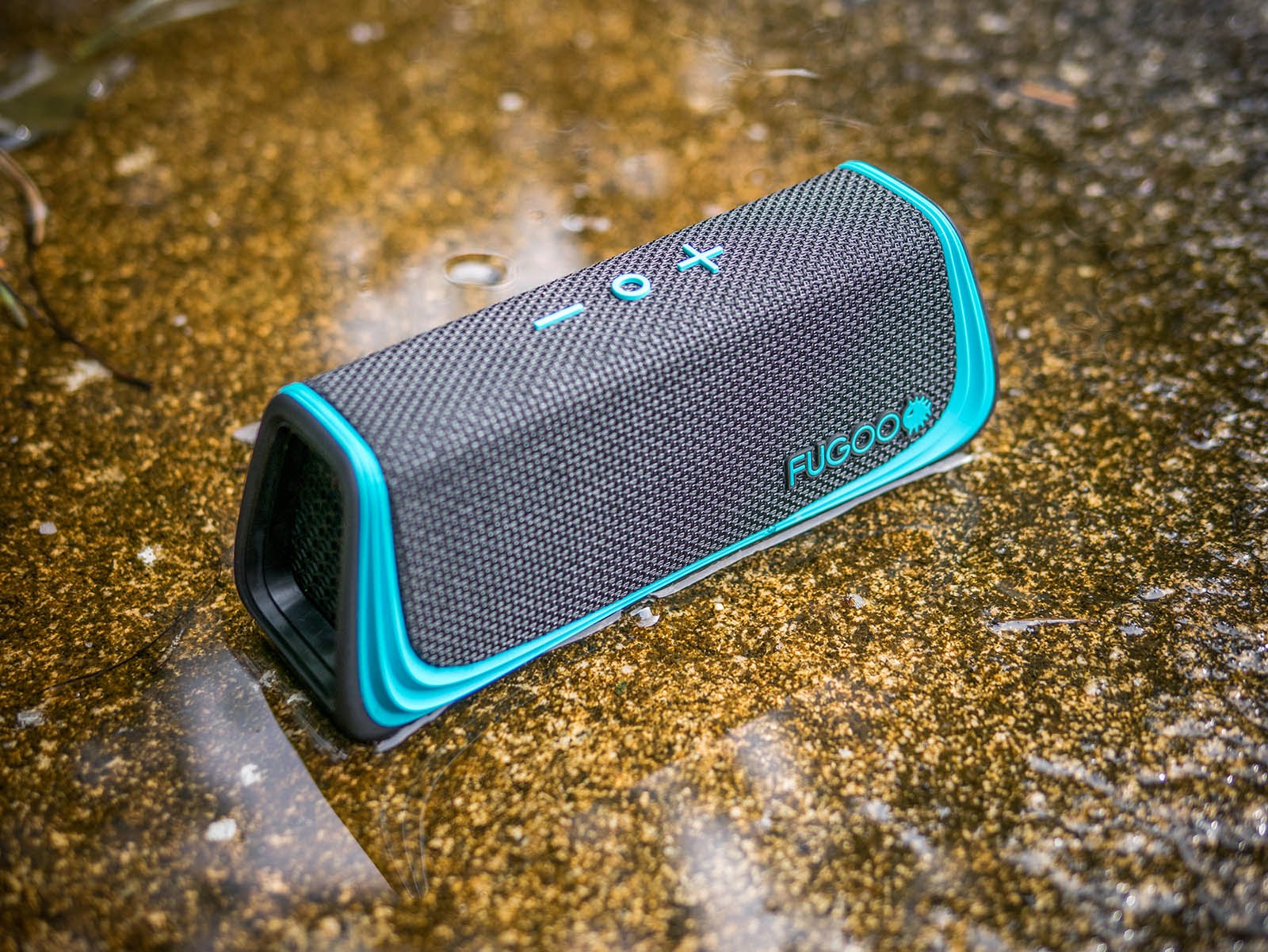
+ Titelsteuerung direkt über Lautsprecher möglich
+ AptX Unterstützung
+ hohe Bluetoothreichweite 
+ Firmwareupdates
+ Laden über Micro-USB
+ zahlreiches optionales Zubehör 

 
- nicht gerade günstig 
- nicht allzu hohe maximale Lautstärke
- Verzerrungen bei hohen Lautstärken
- Bass könnte etwas lauter sein
- keine gehörphysiologische Lautstärkeanpassung, somit etwas "dünn" bei niedrigen Lautstärken
- nur 15 Lautstärkestufen, dadurch teilweise starke Lautstärkesprünge